
12 Best Home Remedies for Silky Hair Naturally
Last updated:

Soft, smooth, and shiny hair is something many people desire, but dryness, frizz, rough texture, and split ends can make hair look dull and difficult to manage. Frequent heat styling, chemical treatments, harsh shampoos, and environmental exposure can strip away moisture and damage the hair’s outer layer, leaving it rough and tangled.
In this article, we will explore some practical home remedies for silky hair, explain how to prepare and apply each remedy, and share tips for getting the best results.
7 Home Remedies for Silky Hair:
Fortunately, you do not always need expensive salon treatments to improve the look and feel of your hair. Several simple home remedies for silky hair use readily available ingredients such as coconut oil, aloe vera, honey, curd, and flaxseeds. These ingredients can help condition the hair, reduce friction, improve softness, and add temporary shine when used correctly.
While natural remedies cannot permanently change your hair’s natural texture or repair severely damaged strands, they may help make dry, frizzy hair feel smoother and more manageable. See below these home remedies for silky hair.
1. Coconut Oil for Silky Hair:
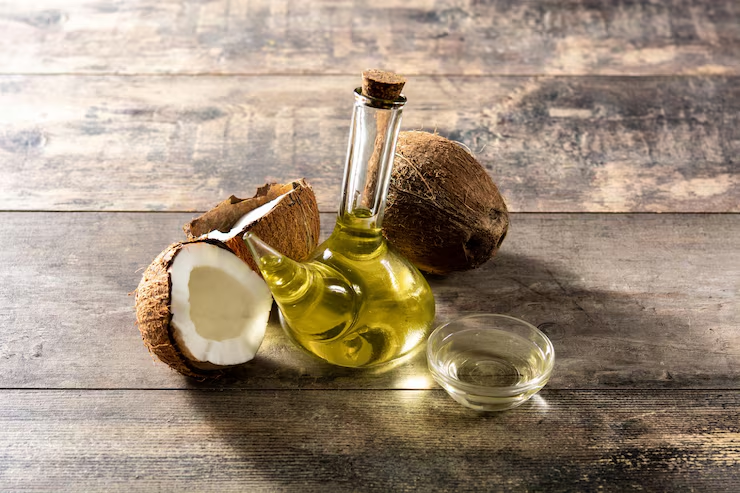
Coconut oil is one of the most popular home remedies for silky hair. It contains fatty acids that can penetrate the hair shaft to some extent, helping reduce protein loss and improving the feel of damaged or dry hair. Coconut oil can also lubricate the strands, making them easier to detangle and helping reduce friction during washing and combing.
How to Use:
- Take the coconut oil in a clean bowl. If it is solid, warm it gently until it melts.
- Allow the oil to cool until it is comfortably warm.
- Apply a small amount to the lengths and ends of your hair.
- Leave it on for 30–60 minutes.
- Wash thoroughly with a gentle shampoo.
- Once or twice a week, depending on your hair type.
2. Aloe Vera Gel for Smooth and Manageable Hair:
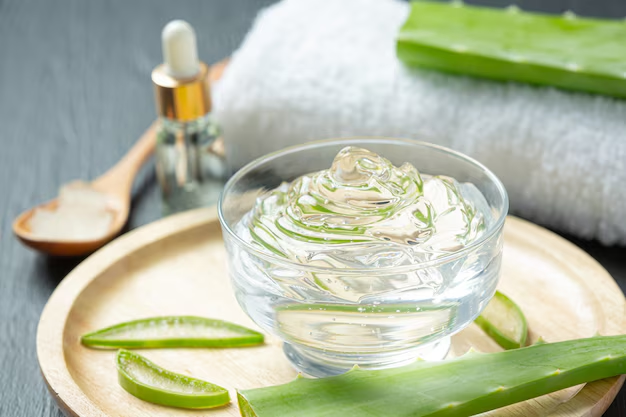
Aloe vera gel is widely used in homemade hair-care treatments because it provides a lightweight, water-based coating that can help hair feel softer and easier to manage. Its gel-like consistency makes it useful for conditioning hair without the heaviness of some oils. It may also help soothe a dry-feeling scalp, although persistent scalp irritation requires appropriate treatment.
How to Use:
- Take pure aloe vera gel in a bowl.
- Add a little water if the gel is too thick to spread.
- Apply it to clean, damp hair, focusing on the lengths and ends.
- Leave it on for 15–20 minutes.
- Rinse thoroughly with lukewarm water.
- Once or twice a week.
3. Curd Hair Mask for Soft and Silky Hair:
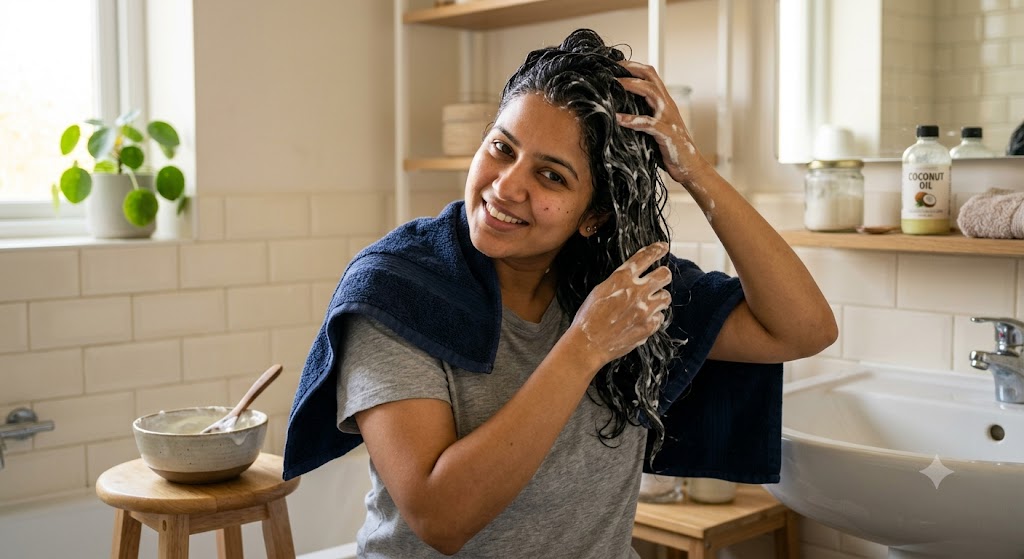
Curd, also known as plain yogurt, is a traditional ingredient in homemade hair masks. Its creamy consistency helps coat the strands, making them feel softer and easier to comb.
Although curd is often promoted as a hair-strengthening treatment, there is limited scientific evidence that applying it directly improves hair growth or repairs damage. Its main practical benefit is the temporary conditioning effect of the mask.
How to Use:
- Place the curd in a bowl and mix until smooth.
- Add honey if desired.
- Apply the mixture to damp hair, concentrating on the mid-lengths and ends.
- Leave it on for 15–20 minutes.
- Rinse thoroughly and shampoo if needed.
4. Honey and Water for Natural Hair Softness
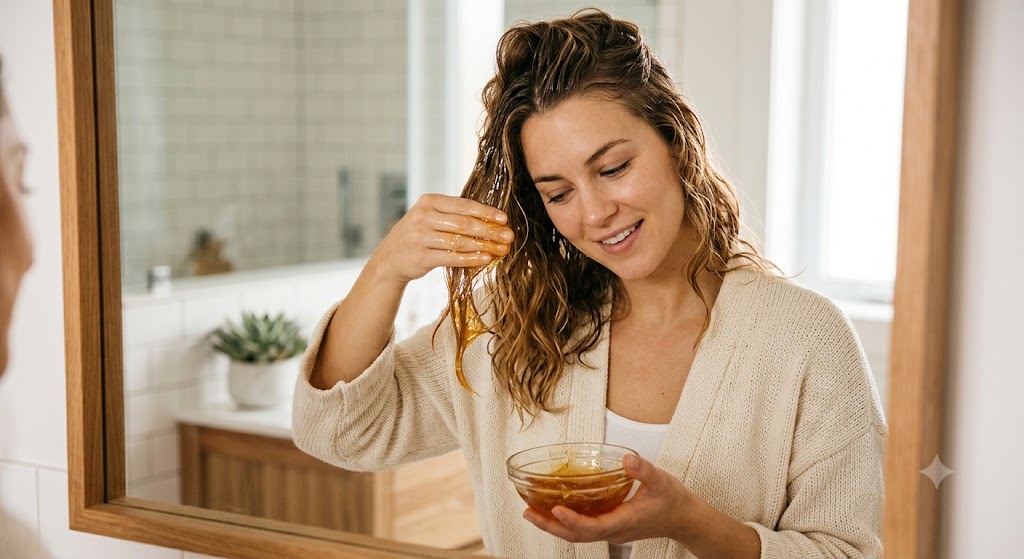
Honey is a humectant, meaning it attracts and holds moisture under suitable conditions. When diluted and used as part of a hair mask, it may help hair feel smoother and less dry.
However, honey is sticky when used undiluted, so mixing it with water or a conditioner makes it easier to spread and rinse out.
How to Use:
- Mix the honey and water until evenly combined.
- Apply the mixture lightly to damp hair.
- Leave it on for 10–15 minutes.
- Rinse thoroughly with lukewarm water.
- Shampoo if the hair still feels sticky.
5. Flaxseed Gel for Frizzy and Silky Hair:
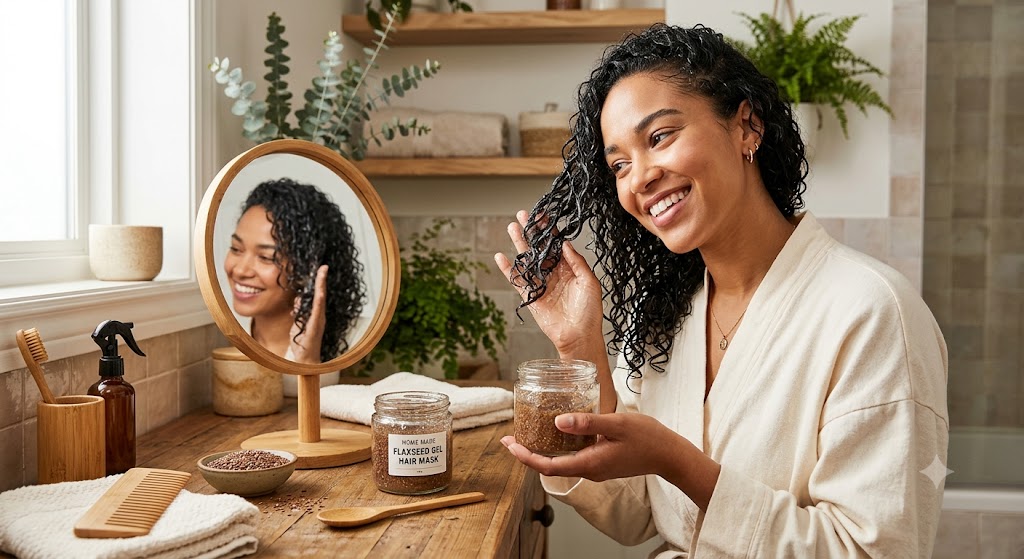
Flaxseed gel is a popular homemade alternative to commercial styling gels. It forms a light film around the hair strands, which can help reduce the appearance of frizz and make curls or waves look more defined. Unlike heavy oils, flaxseed gel is water-based and can be a useful option for people who want a lightweight styling product.
How to Use:
- Add the flaxseeds and water to a small saucepan.
- Bring the mixture to a gentle boil, stirring occasionally.
- Simmer for approximately 5–10 minutes until it becomes slightly slippery and gel-like.
- Strain the mixture while it is still warm, using a fine strainer.
- Allow the gel to cool completely.
- Apply a small amount to damp hair, focusing on frizzy lengths and ends.
- Leave it in as a light styling gel if your hair tolerates it well.
6. Banana Hair Mask for Soft Hair:
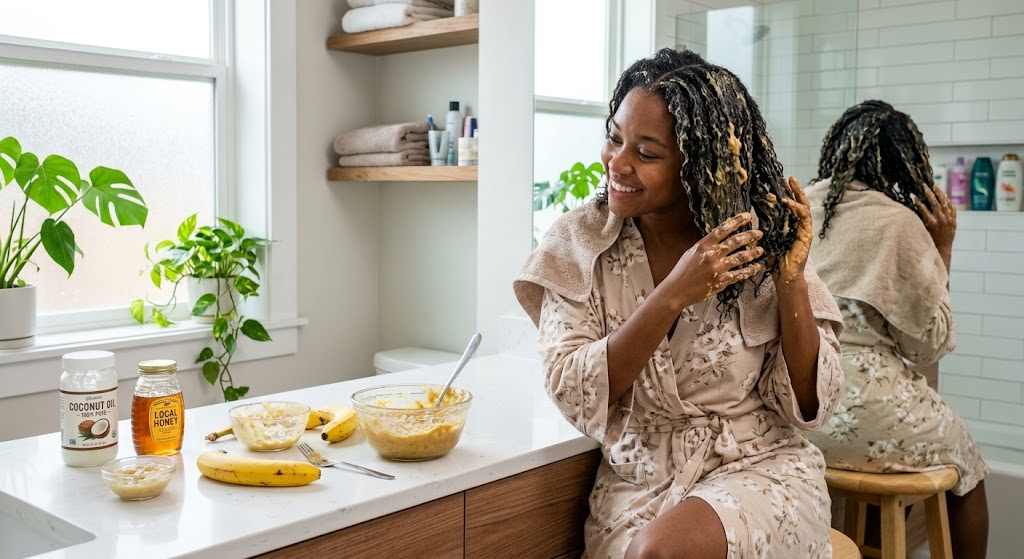
Ripe bananas contain carbohydrates and other natural components that can provide a conditioning coating when used in a hair mask. This may make the hair feel softer, although bananas have not been proven to repair damaged hair fibres.
The biggest challenge is removing banana pieces, so blending the fruit thoroughly is essential.
How to Use:
- Blend the banana until completely smooth.
- Add the conditioner if desired and mix well.
- Apply a thin layer to damp hair, focusing on the lengths.
- Leave it on for 10–15 minutes.
- Rinse thoroughly before shampooing.
7. Avocado Hair Mask for Dry Hair:
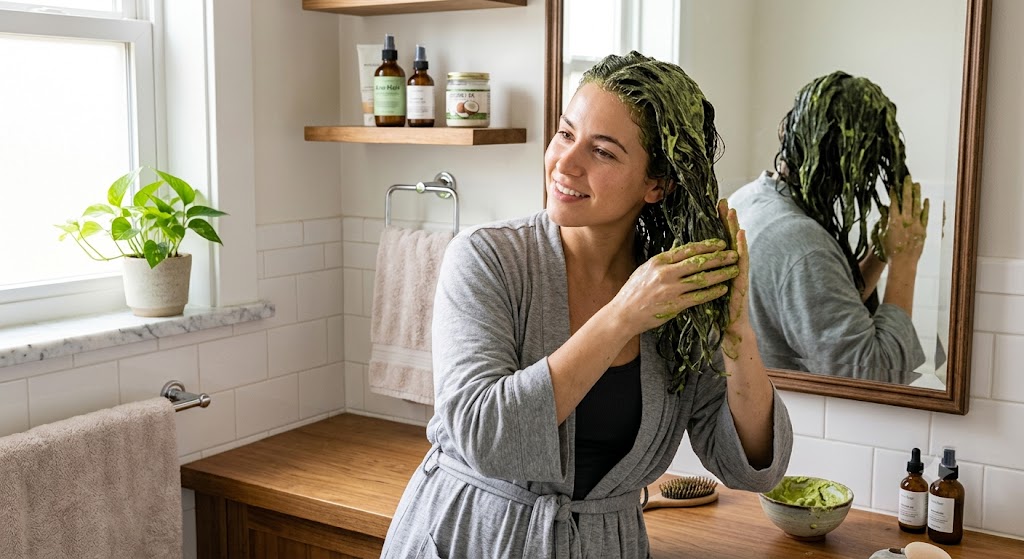
Avocado contains oils and fatty components that can help coat dry hair and improve its softness. A homemade avocado mask may be useful for hair that feels rough after repeated heat styling or chemical processing.
It does not permanently repair split ends or reverse structural damage, but it may improve the hair’s temporary appearance and texture.
How to Use:
- Mash or blend the avocado until completely smooth.
- Add coconut oil if your hair is particularly dry.
- Apply the mask to damp hair, avoiding heavy application at the roots.
- Leave it on for 15–20 minutes.
- Rinse thoroughly and shampoo to remove oily residue.
Tips for Getting Silky Hair at Home:
Home remedies work best when they complement a gentle hair-care routine. A few practical adjustments can help preserve the softness and smoothness you gain from conditioning treatments.
- Use lukewarm water: Very hot water may worsen dryness and leave hair feeling rough.
- Avoid vigorous towel rubbing: Gently squeeze out excess water with a soft towel or cotton T-shirt.
- Detangle carefully: Use a wide-tooth comb and work through knots gently, starting near the ends.
- Apply conditioner after shampooing: Concentrate on the mid-lengths and ends to improve slip and reduce tangling.
- Limit excessive heat styling: Frequent high-temperature styling can damage the cuticle and make hair rougher.
- Protect your hair from friction: A smooth pillowcase or a loose protective hairstyle may help reduce tangling.
- Trim split ends when needed: Conditioning products can temporarily smooth split ends, but they cannot permanently join them back together.
Remember that naturally curly, coily, or textured hair may feel different from naturally straight hair. The goal is to make your own hair softer, smoother, and easier to manage rather than permanently changing its natural texture.
Conclusion:
The key is to select remedies according to your hair type, use them in moderation, and pay attention to how your hair responds. Coconut oil may be particularly useful for dry hair, while aloe vera and flaxseed gel can offer lighter alternatives for managing frizz.
Remember that no natural ingredient can permanently repair split ends or reverse severe hair damage. For the best results, combine suitable conditioning treatments with gentle washing, careful detangling, and reduced heat exposure.
FAQs:
A. Coconut oil is a useful option for dry, rough hair because it can penetrate the hair shaft to some extent and help reduce protein loss. Aloe vera gel and a regular conditioner may also help improve softness and manageability. The best choice depends on your hair type and how it responds to each ingredient.
A. For a simple overnight routine, apply a very small amount of coconut oil to the lengths and ends if your hair tolerates it. Protect your pillowcase and shampoo the oil out the next morning. Avoid overnight treatments if they irritate your scalp, and remember that leaving a mask on longer does not necessarily improve its results.
A. Aloe vera gel may help hair feel softer and easier to manage by providing a lightweight coating. It can be particularly useful for people who find heavy oils too greasy. However, it does not permanently straighten hair or repair severe structural damage.
A. Coconut oil is a strong option for dry hair because research suggests it can reduce protein loss when used as a pre-wash treatment. Olive oil may also soften coarse hair by coating the strands. Fine or oily hair generally benefits from smaller quantities of oil.
A. For most people, once a week is a reasonable starting point. Lightweight treatments may be used more frequently if tolerated, while heavy oil masks are usually better used less often. Adjust the frequency if your hair becomes greasy, limp, stiff, or difficult to rinse.
A. You may notice softer, shinier, and more manageable hair within a week, especially if dryness and tangling are the main concerns. However, significant damage and split ends cannot be reversed in seven days. Consistent conditioning and gentle handling can improve the appearance of your hair over time.
A. Rice water may leave a temporary coating that makes hair feel smoother, but evidence for its long-term benefits is limited. Using it too often can cause stiffness or residue. Start with an occasional rinse and stop if your hair becomes dry or tangled.
A. You can, but it is usually better to start with one treatment at a time so you can identify what works for your hair. Combining several oils, masks, and acidic rinses may leave buildup or irritate the scalp. A simple mask followed by a suitable conditioner is generally enough.
A. No. Home remedies may temporarily improve softness, smoothness, and shine, but they cannot permanently change your natural hair texture. Results also vary depending on the extent of damage and the characteristics of your hair.
A. Not always. Natural ingredients can still cause allergic reactions, irritation, buildup, or dryness. Patch-test unfamiliar ingredients, avoid applying irritating mixtures to broken skin, and use extra caution with acidic ingredients such as vinegar. If you experience persistent itching, redness, scaling, or hair loss, consult a dermatologist.

Amit Bose is a BA student studying journalism. He follows online news closely and runs a news page on Facebook. At FastNewsFeed, he covers news and current events, and also writes on finance, beauty and lifestyle topics using published sources.