
9 Home Remedies for Dull Skin: Natural Ways to Restore a Healthy-Looking Glow
Last updated:
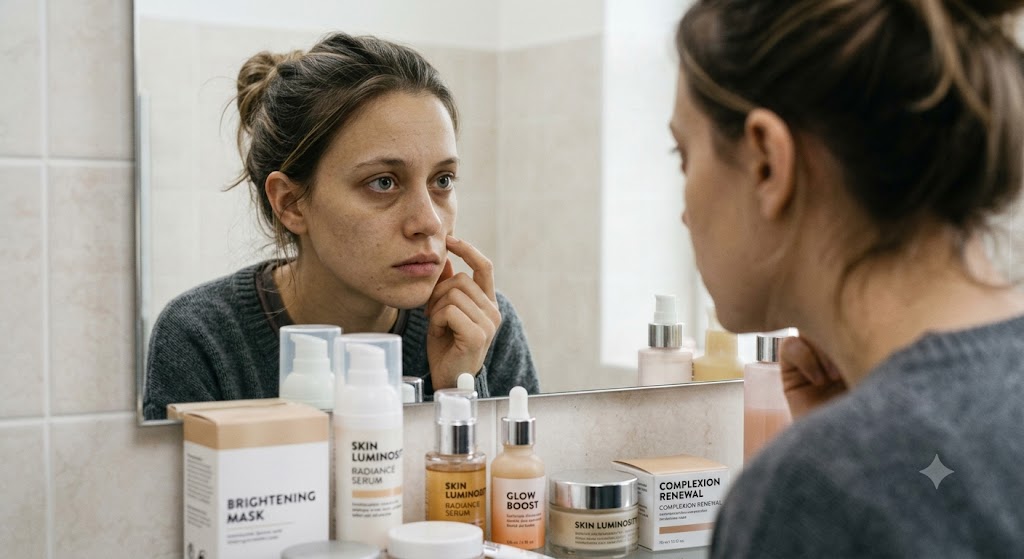
Dull skin can make your complexion look tired, uneven, or lacking its natural glow. Factors such as dehydration, buildup of dead skin cells, lack of sleep, stress, environmental pollution, and prolonged sun exposure can all contribute to a dull-looking complexion.
The good news is that you don’t necessarily need an elaborate skincare routine to improve the appearance of dull skin. Simple habits and gentle home remedies for dull skin can help support smoother, healthier-looking skin.
However, it’s important to remember that “glowing skin” doesn’t happen overnight. Consistent skincare, sun protection, adequate sleep, and a balanced lifestyle are more important than using aggressive DIY treatments.
Here are seven gentle home remedies you can incorporate into your routine.
What Causes Dull Skin?
Before looking at home remedies for dull skin, it’s useful to understand what may be making your complexion look tired.
Common factors include:
- Accumulation of dead skin cells
- Dehydrated skin
- Excessive sun exposure
- Pollution and environmental factors
- Lack of sleep
- Stress
- Smoking
- An unsuitable skincare routine
- Over-exfoliation or irritation
- Aging and natural changes in the skin
9 Home Remedies for Dull Skin:
Dullness occurs when the skin barrier becomes irritated or dehydrated. In such cases, using more exfoliating products may actually make the skin look worse.
Dull, tired-looking skin is a common concern caused by factors such as dryness, sun exposure, pollution, stress, lack of sleep, and the buildup of dead skin cells. If your skin has lost its natural-looking glow, simple home remedies for dull skin may help make it feel softer, smoother, and more refreshed.
Many kitchen ingredients can be used to prepare simple face packs at home. Ingredients such as yogurt, honey, oatmeal, aloe vera, and banana can provide gentle, skin-friendly care. However, natural doesn’t always mean suitable for everyone, so it’s important to patch-test any new ingredient before applying it to your face.
Here are some easy face packs you can try at home.
1. Honey and Yogurt Face Pack:
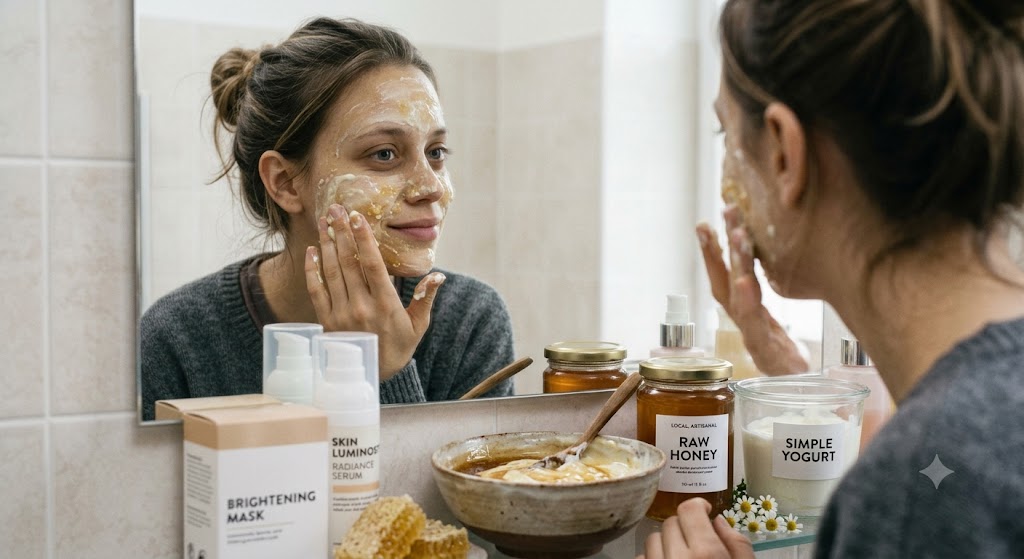
Honey and yogurt make a simple combination for dry and dull-looking skin. Yogurt contains lactic acid, which can provide gentle exfoliation, while honey helps attract moisture to the skin.
How to make it:
- Take 1 tablespoon of plain yogurt.
- Add 1 teaspoon of honey.
- Mix well.
- Apply a thin layer to clean skin.
- Leave it on for 10–15 minutes.
- Rinse with lukewarm water and apply moisturizer.
Use plain, unsweetened yogurt rather than flavored yogurt.
2. Oatmeal and Honey Face Pack:
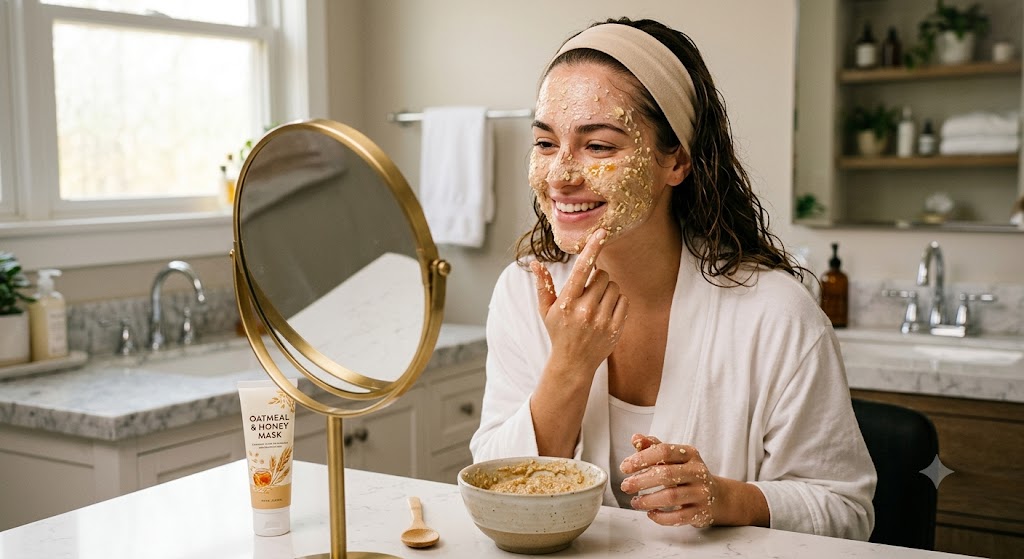
Oatmeal is a gentle ingredient that can help soothe and soften the skin. Combined with honey, it makes a useful homemade face pack for skin that feels dry or rough.
How to make it:
- Take 1 tablespoon of finely ground oatmeal.
- Add 1 teaspoon of honey.
- Mix with a little water to form a smooth paste.
- Apply gently to your face.
- Leave it for about 10–15 minutes.
- Rinse without vigorous scrubbing.
This is one of the gentler home remedies for dull skin, particularly when your skin also feels dry.
3. Papaya and Yogurt Face Pack:
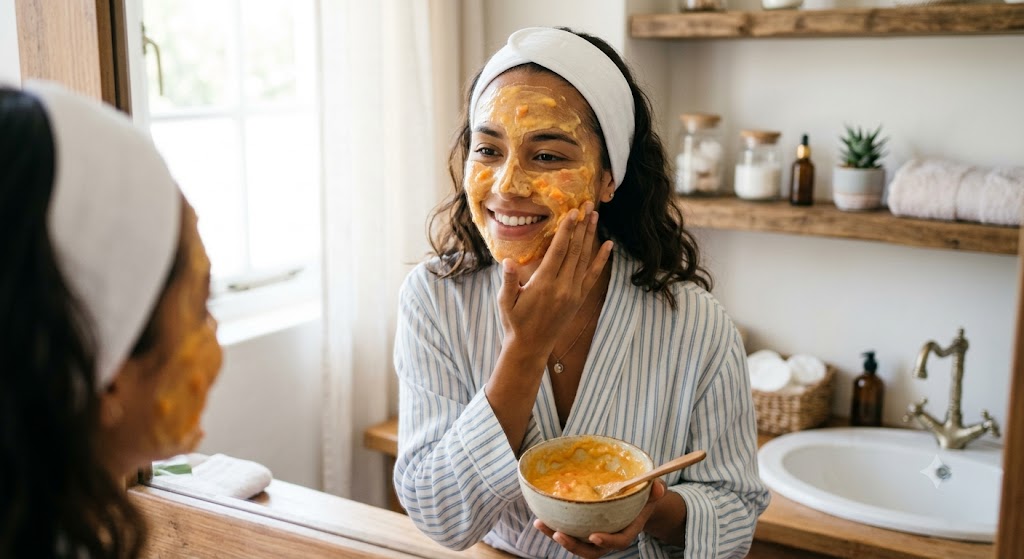
Ripe papaya contains enzymes that are often used in cosmetic exfoliating products. A simple papaya and yogurt pack can provide gentle exfoliating care.
How to make it:
- Mash 2 tablespoons of ripe papaya.
- Add 1 tablespoon of plain yogurt.
- Mix well.
- Apply a thin layer to clean skin.
- Leave it on for about 5–10 minutes.
- Rinse thoroughly.
Because papaya can irritate sensitive skin, patch-test this remedy first and don’t use it on broken or irritated skin.
4. Banana and Honey Face Pack:
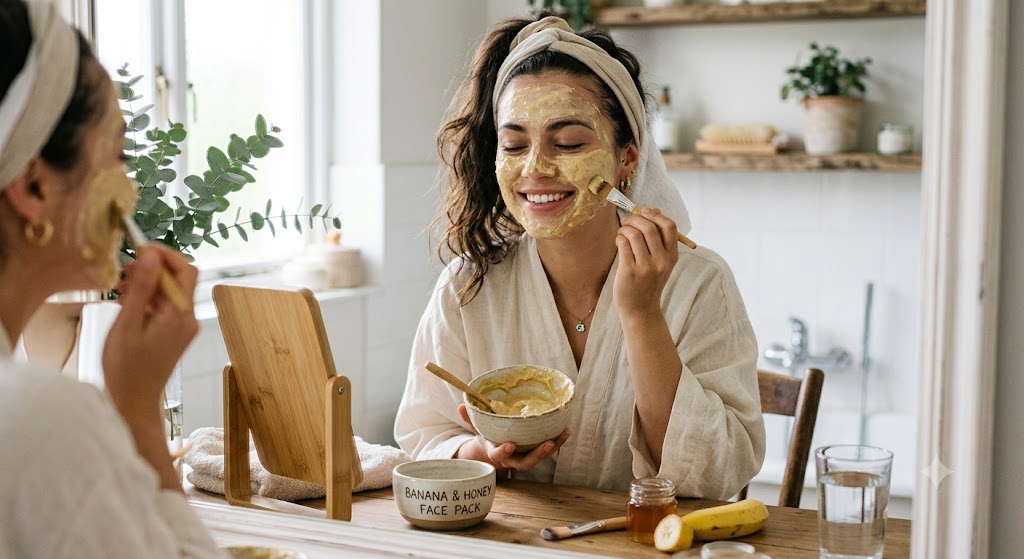
Bananas can be mashed into a creamy face pack that helps leave skin feeling soft and moisturized. Adding a small amount of honey makes the mixture more hydrating.
How to make it:
- Mash half a ripe banana.
- Add 1 teaspoon of honey.
- Mix until smooth.
- Apply to clean skin.
- Leave it on for 10–15 minutes.
- Rinse thoroughly.
This can be a simple option for people who want a moisturizing DIY face pack.
5. Turmeric and Yogurt Face Pack:
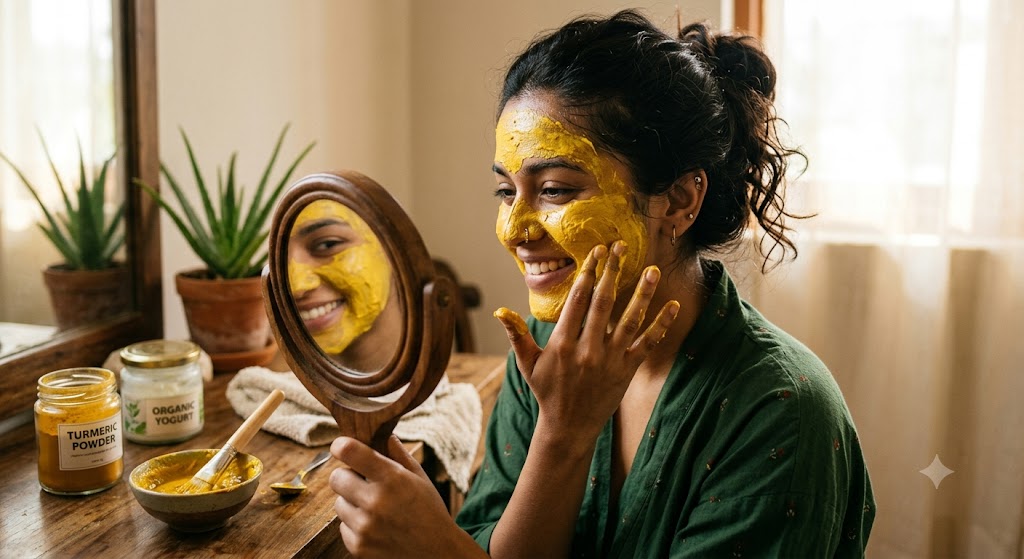
Turmeric has traditionally been used in Indian skincare routines. When combined with yogurt, it creates a simple face pack that can help skin feel refreshed.
How to make it:
- Take 1 tablespoon of plain yogurt.
- Add a very small pinch of turmeric.
- Mix thoroughly.
- Apply a thin layer to your face.
- Leave it on for around 10 minutes.
- Rinse thoroughly.
Be careful with turmeric because it can temporarily stain the skin or clothing. Avoid applying large amounts.
6. Oatmeal and Yogurt Face Pack:
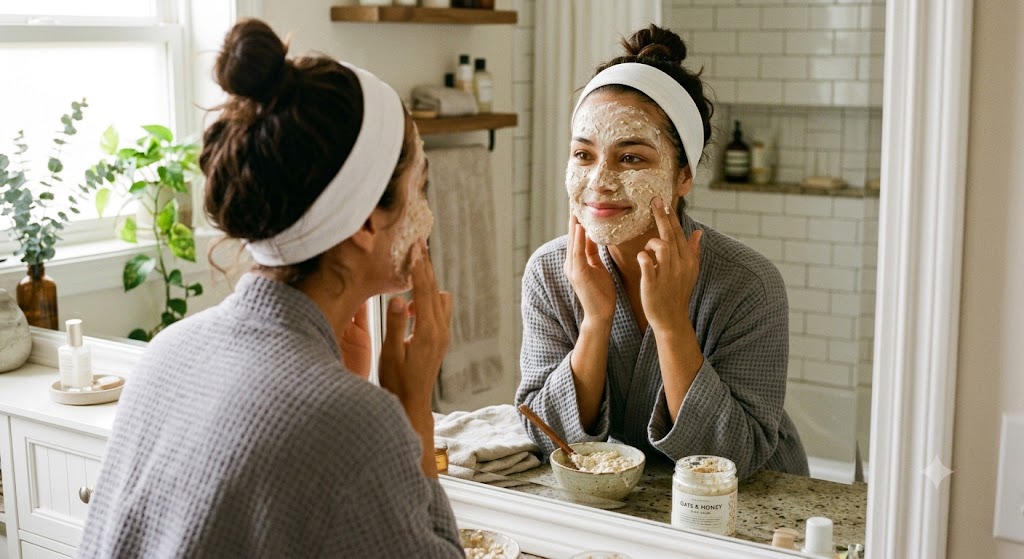
If your skin looks dull and feels rough, oatmeal and yogurt can provide gentle exfoliating care without the need for harsh physical scrubbing.
How to make it:
- Mix 1 tablespoon of finely ground oatmeal with 1 tablespoon of plain yogurt.
- Apply the mixture gently to your face.
- Leave it for 10 minutes.
- Rinse with lukewarm water.
Don’t rub the mixture aggressively while removing it. Gentle application is better for maintaining the skin barrier.
7. Cucumber and Aloe Vera Face Pack
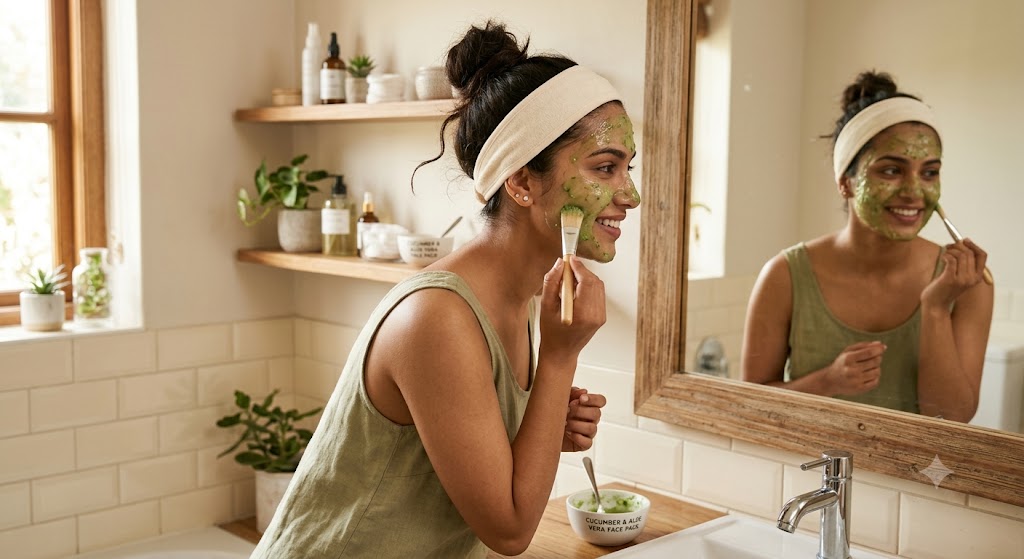
Cucumber is a refreshing ingredient with a high water content, while aloe vera can provide a soothing sensation. Together, they make a cooling DIY face pack.
How to make it:
- Blend a few pieces of cucumber.
- Mix 1 tablespoon of cucumber pulp with 1 tablespoon of aloe vera gel.
- Apply it to clean skin.
- Leave it on for 10–15 minutes.
- Rinse with cool or lukewarm water.
This can be particularly refreshing after spending time outdoors.
8. Avocado and Honey Face Pack
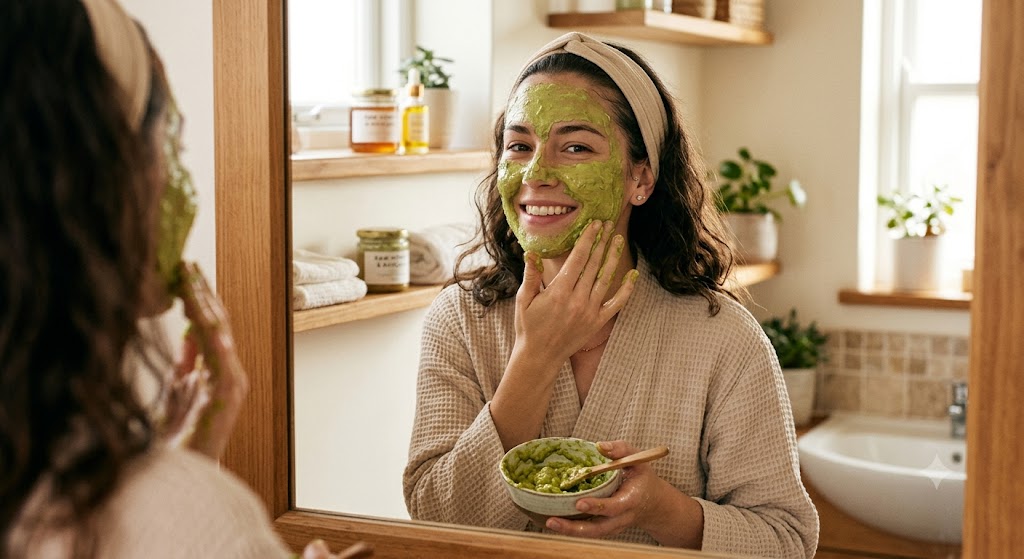
Avocado contains fats and other nutrients and can create a rich, moisturizing face pack. Honey adds additional moisture.
How to make it:
- Mash 2 tablespoons of ripe avocado.
- Add 1 teaspoon of honey.
- Mix into a smooth paste.
- Apply to clean skin.
- Leave for 10–15 minutes.
- Rinse thoroughly.
This remedy may be more suitable for skin that feels dry rather than very oily.
9. Gram Flour and Yogurt Face Pack:
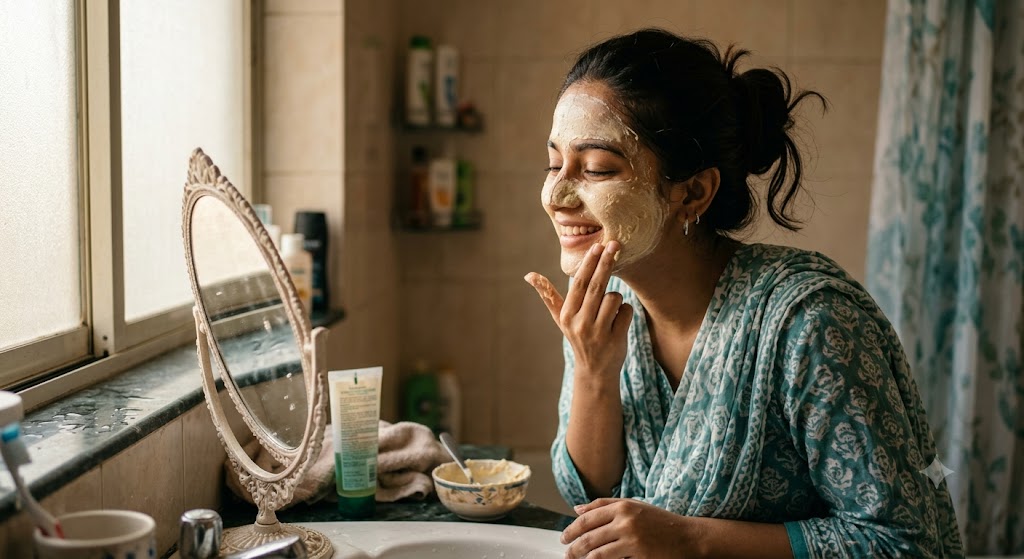
Gram flour, also known as besan, is a traditional ingredient in many Indian skincare routines. Mixing it with yogurt creates a simple homemade face pack.
How to make it:
- Take 1 tablespoon of gram flour.
- Add 1 tablespoon of plain yogurt.
- Mix into a smooth paste.
- Apply a thin layer to the face.
- Leave it for approximately 10 minutes.
- Wet your hands and gently rinse it away.
Avoid vigorous rubbing because excessive physical exfoliation can irritate the skin.
How Often Should You Use Face Packs for Dull Skin?
You don’t need to use a face pack every day. For most people, once or twice a week is enough. Using several different masks frequently can irritate the skin, particularly if the ingredients have exfoliating properties.
Choose one remedy that suits your skin type and use it consistently rather than constantly switching between DIY treatments.
Simple Routine for Dull Skin
You don’t need a complicated routine to care for dull-looking skin.
Morning
Gentle cleanser → moisturizer → broad-spectrum sunscreen
Evening
Gentle cleanser → moisturizer
If your skin tolerates it, you can occasionally incorporate a suitable exfoliating product, but avoid aggressive physical scrubbing.
Consistency is more important than constantly changing products.
How Long Does It Take to Improve Dull Skin?
There is no universal timeline because dullness can have different causes.
If dehydration is contributing to the problem, improving your moisturizing routine may make your skin feel more comfortable relatively quickly. Other concerns, such as uneven pigmentation or signs of sun damage, generally require longer-term skincare and sun protection.
Don’t expect a homemade face mask to transform your complexion overnight permanently. Healthy-looking skin is usually the result of consistent care over time.
Final Thoughts:
These 7 home remedies for dull skin—aloe vera, oatmeal, honey, regular moisturizing, cool compresses, sun protection, and healthy lifestyle habits—can be simple additions to your skincare routine.
FAQs:
A. There isn’t one remedy that works for everyone. Gentle moisturizing, sun protection, adequate sleep, and avoiding harsh skincare practices are among the most useful steps. Aloe vera, oatmeal, and honey may also be suitable for some people.
A. Focus on keeping your skin moisturized, protecting it from UV exposure, getting enough sleep, eating a balanced diet, and using gentle skincare products. Avoid harsh DIY treatments that can irritate the skin.
Aloe vera can help soothe and moisturize the skin, which may make dry or dehydrated skin look healthier. Choose a simple product and patch-test it before applying it to your entire face.
A. Honey can help moisturize the skin and may leave it feeling softer. However, it should not be considered a guaranteed skin-brightening treatment. Consistent skincare and sun protection are more important for maintaining an even-looking complexion.
A. Adequate hydration is important for overall health. If you are dehydrated, correcting that can benefit your overall well-being, but drinking excessive amounts of water is not a guaranteed solution for dull skin.
A. The ideal frequency depends on your skin type and the exfoliating product you use. Avoid aggressive daily scrubbing. If your skin becomes red, tight, burning, or unusually sensitive, reduce or stop exfoliation and focus on barrier-supportive skincare.
A. Dullness can have many causes, including dehydration, accumulated dead skin cells, sun exposure, irritation, lack of sleep, stress, and natural skin changes with age. If your skin remains persistently dull or develops unusual discoloration, scaling, itching, or other symptoms, consider consulting a dermatologist.

Amit Bose is a BA student studying journalism. He follows online news closely and runs a news page on Facebook. At FastNewsFeed, he covers news and current events, and also writes on finance, beauty and lifestyle topics using published sources.