
Vaseline for Cracked Heels: How to Use It for Soft, Smooth Feet
Last updated:
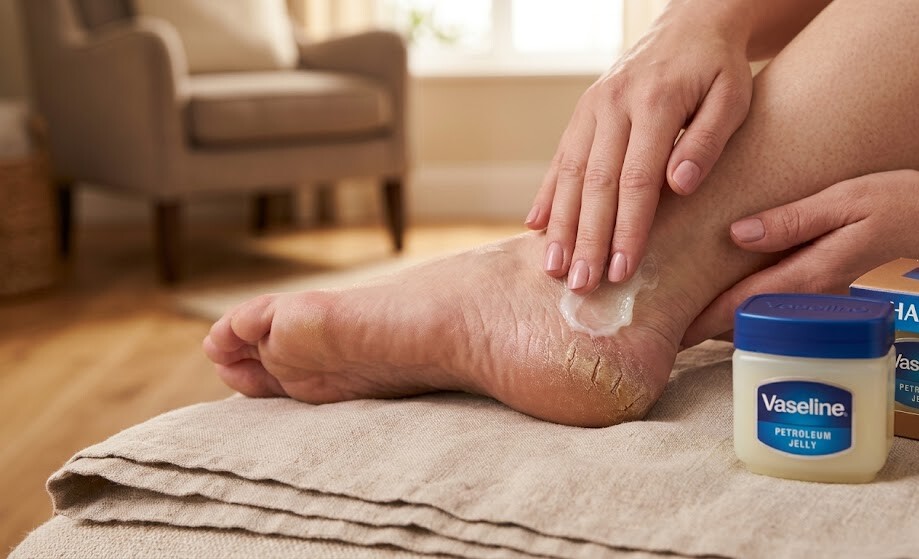
Cracked heels are a common foot-care problem that can leave your feet feeling dry, rough, uncomfortable, and sometimes painful. When the skin around your heels loses moisture and becomes thick or hardened, it can develop small cracks or deep fissures.
One simple and affordable remedy many people turn to is Vaseline for cracked heels. Vaseline, also known as petroleum jelly, works by creating a protective layer over the skin that helps reduce moisture loss. When used regularly as part of a good foot-care routine, it can help keep dry heels softer and more comfortable.
But how exactly should you use Vaseline for cracked heels? Is it enough on its own? And how long does it take to see results? Let’s take a closer look.
Does Vaseline Help Cracked Heels?
Yes, Vaseline can help with dry and cracked heels by acting as an occlusive moisturizer. Rather than adding a large amount of water to the skin, petroleum jelly forms a barrier that helps prevent existing moisture from escaping.
This is particularly useful when your heels are extremely dry. Applying Vaseline after bathing or before going to bed can help keep the skin moisturized for longer.
However, Vaseline should not be considered an instant cure for severe heel cracks. If your heels are deeply cracked, bleeding, infected, or persistently painful, medical advice may be necessary.
For mild to moderate dryness, combining Vaseline with consistent moisturizing and gentle foot care can be an effective approach.
Benefits of Vaseline for Cracked Heels
Using Vaseline on cracked heels can provide several benefits.
1. Helps Lock in Moisture:
The primary benefit of petroleum jelly is its ability to form a protective barrier on the skin. This barrier helps reduce water loss, which can be especially beneficial for very dry heels.
2. Softens Dry Skin:
Regular application can make rough, dry skin feel softer and more comfortable. Softening the skin can also help reduce the rough texture associated with hardened heels.
3. Protects the Skin Barrier:
Dry, cracked skin has a weakened protective barrier. Applying an occlusive product such as petroleum jelly can help protect the surface from further moisture loss and environmental irritation.
4. Ideal for Overnight Foot Care:
Vaseline is particularly convenient as a nighttime treatment. Applying it before bed gives the product several hours to remain on the skin without being rubbed away by walking or footwear.
5. Affordable and Easy to Use:
Petroleum jelly is widely available and requires no complicated preparation. It can easily be incorporated into a daily foot-care routine.
How to Use Vaseline for Cracked Heels:
Using Vaseline correctly is more important than simply applying a thick layer randomly. Follow these steps for a simple overnight routine.

Step 1: Wash Your Feet:
Clean your feet with lukewarm water and a gentle cleanser. Avoid excessively hot water because frequent exposure to hot water can contribute to dry skin.
Step 2: Pat Your Feet Dry:
After washing, gently pat your feet with a clean towel. Do not rub the skin aggressively.
Your heels should remain slightly damp rather than completely dry.
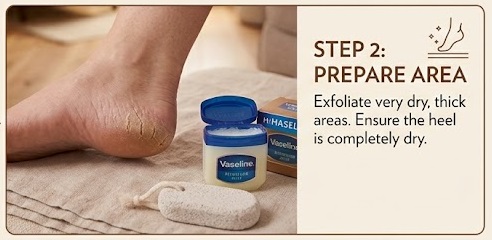
Step 3: Apply a Moisturizer:
For very dry or thickened heels, consider applying a moisturizing foot cream first. Products containing ingredients such as urea can be particularly useful for dry, rough skin.
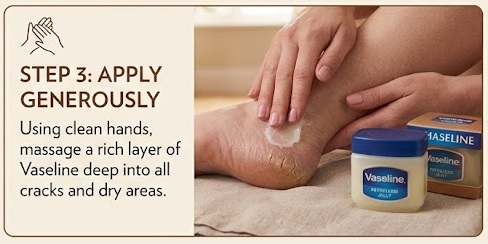
Step 4: Apply Vaseline:
Apply a thin but generous layer of Vaseline over your heels, concentrating on the dry and cracked areas.
There is no need to use an excessive amount. The goal is to create an even protective layer over the skin.
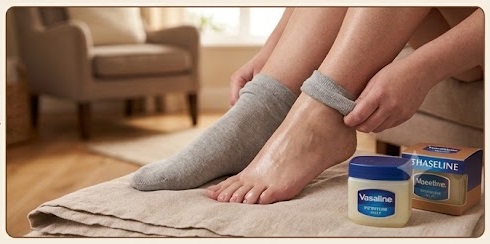
Step 5: Wear Cotton Socks:
Put on a clean pair of cotton socks after applying Vaseline. This helps keep the product in place while you sleep and prevents it from getting onto your bedsheets.
Step 6: Repeat Regularly:
Consistency is key. Apply Vaseline regularly, particularly at night, rather than expecting dramatic results after one application.
How Often Should You Use Vaseline on Cracked Heels?
You can generally use Vaseline on dry heels regularly, including as part of a nightly routine.
If your heels are very dry, applying it every night may help maintain moisture. Once your skin becomes softer and the cracking improves, you can continue using it as needed to prevent the dryness from returning.
The most important factor is consistency. Applying Vaseline once and then stopping is unlikely to provide the same benefit as maintaining a regular foot-care routine.
Can You Put Vaseline on Cracked Heels Overnight?
Yes. Applying Vaseline overnight is one of the easiest ways to incorporate it into your foot-care routine.
Before bed, wash your feet, pat them dry while leaving the skin slightly damp, apply your moisturizer if needed, and then apply Vaseline to the heels. Put on clean cotton socks and leave the product on overnight.
In the morning, your feet may feel softer and less dry.
For persistent cracking, repeat the routine consistently rather than relying on a single overnight application.
How Long Does Vaseline Take to Heal Cracked Heels?
The time required to improve cracked heels varies depending on how dry or damaged the skin is.
Mild dryness may feel better relatively quickly with consistent moisturization. More severe cracks can take considerably longer to improve.
Vaseline helps protect and moisturize the skin, but it does not necessarily address every underlying reason for persistent cracked heels. Factors such as dry weather, prolonged standing, footwear, frequent bathing, and certain skin conditions can contribute to heel dryness.
If your heels do not improve despite consistent home care, consider consulting a healthcare professional.
Final Thoughts:
Vaseline for cracked heels is a simple and affordable option for managing dry, rough skin. Its main advantage is its ability to create a protective barrier that helps lock in moisture and reduce further moisture loss.
FAQs:
A. Yes. Vaseline, or petroleum jelly, can help protect dry, cracked heels by forming an occlusive layer that reduces moisture loss. It works best when used consistently as part of a broader moisturizing routine.
A. Yes, Vaseline can generally be used regularly on dry heels. Applying it at night and wearing clean cotton socks can help keep the product on the skin while you sleep.
A. For very dry heels, you can apply a moisturizing foot cream first and then Vaseline. The moisturizer provides skin-conditioning ingredients, while Vaseline helps reduce moisture loss.
A. Vaseline can help protect and moisturize dry skin, but deep heel fissures may require additional treatment. If cracks are severe, painful, bleeding, or infected, seek professional medical advice.
A. Yes. Petroleum jelly is particularly useful for dry skin because it creates a protective barrier that helps prevent moisture from escaping. For very thick or rough skin, combining it with an appropriate foot cream may be more beneficial.

Amit Bose is a BA student studying journalism. He follows online news closely and runs a news page on Facebook. At FastNewsFeed, he covers news and current events, and also writes on finance, beauty and lifestyle topics using published sources.