
Rose Water for Hair: Benefits, How to Use & Hair Growth Tips
Last updated:

Rose water has long been used in skincare, but did you know it can also be a simple addition to your hair-care routine? From refreshing the scalp to reducing frizz and adding shine, rose water for hair may offer several useful benefits.
But is rose water actually good for hair growth? The honest answer is that it may support a healthier scalp, but there is not enough strong scientific evidence to prove that rose water directly stimulates hair growth. Think of it as a gentle hair-care ingredient rather than a proven hair-growth treatment.
What Is Rose Water?
Rose water is made by steeping or distilling rose petals with water. It has a mild floral fragrance and is commonly used in skincare, hair care, cooking, and traditional beauty routines.
For hair, rose water is generally used as a scalp refresher, hair rinse, leave-in mist, or as an ingredient in DIY hair masks. Its lightweight texture makes it particularly appealing to people who don’t want heavy oils or creams on their hair.
Benefits of Rose Water for Hair
Rose water isn’t a miracle treatment, but it can be a useful addition to a basic hair-care routine. Here are some of its potential benefits.
1. May Help Refresh and Soothe the Scalp
A healthy scalp provides the foundation for healthy-looking hair. Rose water can feel cooling and refreshing when sprayed onto the scalp, especially after exercise, on hot days, or between hair washes.
Its light, water-based texture also makes it convenient for people who dislike applying thick oils directly to their scalp.
If your scalp feels dry or uncomfortable, a light mist of rose water may provide temporary soothing and hydration. However, persistent itching, redness, scaling, or irritation can have several causes and may require proper evaluation rather than relying on rose water.
2. May Help With Dandruff-Related Dryness
Rose water is sometimes used in DIY hair-care routines for dandruff and scalp dryness. Its refreshing nature may make a dry scalp feel more comfortable.
However, it’s important to distinguish between dry scalp and dandruff. Dandruff is associated with factors such as skin-cell turnover and the scalp’s oil and yeast environment. Rose water has not been established as a reliable treatment for dandruff.
So, if you have occasional scalp dryness, rose water may be a gentle addition to your routine. If you have persistent or severe dandruff, a proven anti-dandruff shampoo is generally a more appropriate approach.
3. Can Help Reduce the Appearance of Frizz
Frizz is often related to dryness, humidity, hair damage, and the condition of the hair’s outer layer.
Because rose water is lightweight, misting a small amount onto the hair can help make it feel refreshed and easier to manage. When combined with an appropriate moisturizing ingredient, it can also become part of a simple anti-frizz routine.
Keep in mind that rose water alone is unlikely to dramatically transform very dry or damaged hair. For significant frizz, conditioning treatments, leave-in conditioners, and reducing heat and mechanical damage can be more effective.
4. May Add Softness and Shine
Well-conditioned hair tends to reflect light more evenly, which gives it a shinier appearance. Rose water can add a light layer of moisture to the hair, potentially making it look fresher and feel softer.
It can work particularly well as a lightweight mist for people who find traditional hair oils too heavy.
For maximum shine, however, rose water should be considered one part of your hair-care routine rather than a standalone solution. Regular conditioning, gentle washing, adequate moisture, and minimizing damage are more important for maintaining healthy-looking hair.
Rose Water for Hair Growth: Does It Really Work?
This is where it’s important to be realistic.
There is no strong evidence that rose water directly causes hair to grow faster or increases hair density. You may see claims online suggesting that spraying rose water on the scalp can stimulate hair follicles, but these claims should not be confused with established clinical evidence.
So, why do people use rose water for hair growth?
The answer is mainly scalp care.
A clean, comfortable, well-maintained scalp is an important part of overall hair care. Rose water may help refresh the scalp and provide a pleasant, lightweight moisturizing step. These effects can support a good hair-care routine, but that doesn’t mean rose water itself activates hair follicles or treats hair loss.
If you’re experiencing significant hair shedding, thinning, bald patches, or a widening part, it’s better to look for the underlying cause. Hair loss can be associated with genetics, nutritional deficiencies, hormonal changes, stress, certain medications, scalp conditions, and other factors.
In other words, you can use rose water for scalp health, but don’t rely on it as a scientifically proven hair-growth treatment.
6 Ways to Use Rose Water for Hair
There are several easy ways to incorporate rose water into your routine. Start with one method rather than trying everything at once, particularly if you have a sensitive scalp.
1. Use Rose Water as a Hair Rinse After Shampoo
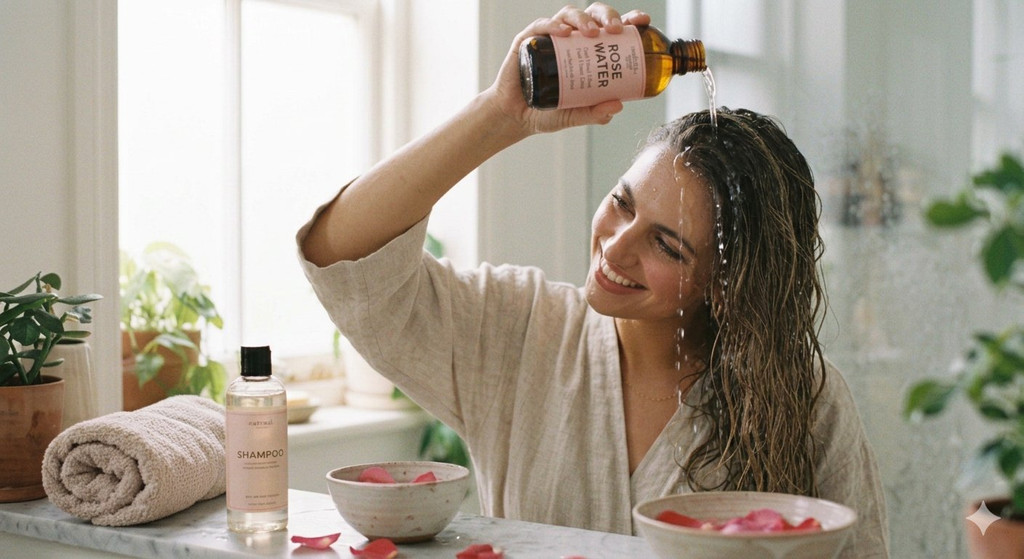
A rose-water rinse is one of the easiest ways to use it.
How to do it:
- Wash your hair with your regular shampoo.
- Rinse the shampoo thoroughly.
- Apply or pour rose water over your scalp and hair lengths.
- Gently massage the scalp with your fingertips.
- Leave it on for a few minutes.
- Rinse lightly with cool or lukewarm water if desired.
- Follow with conditioner if your hair needs additional moisture.
This method can leave your hair feeling fresh and lightly scented without adding a heavy product.
2. Use Rose Water as a Scalp Spray
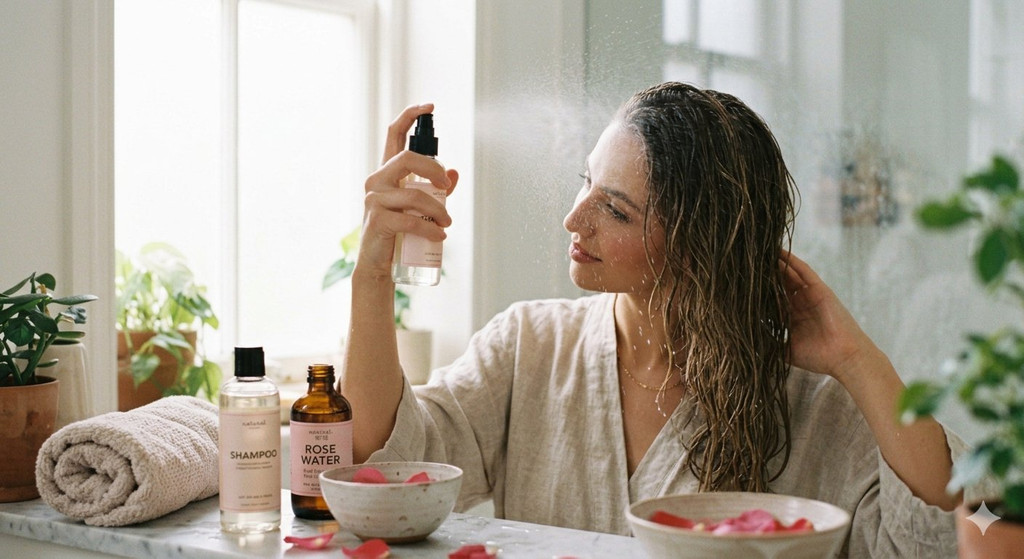
A scalp spray is particularly convenient when your scalp needs a quick refresh.
How to do it:
- Pour pure rose water into a clean spray bottle.
- Part your hair into several sections.
- Lightly mist the rose water onto the scalp.
- Massage gently with your fingertips.
- Allow the scalp to air-dry.
Avoid soaking the scalp. A light mist is usually enough.
3. Mix Rose Water With Coconut Oil
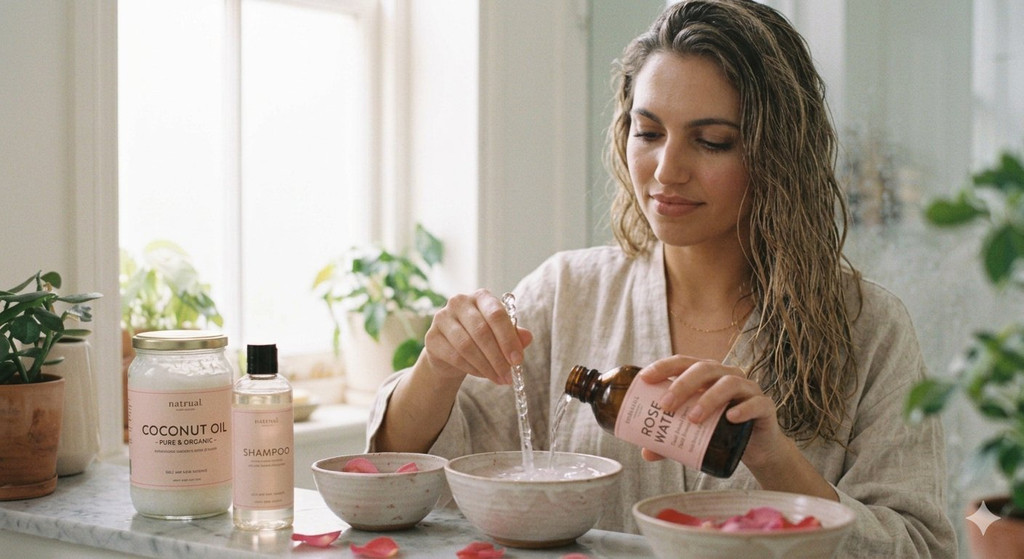
Coconut oil and rose water can be used together as a simple pre-shampoo treatment. Coconut oil provides the oil component, while rose water provides the water-based component.
Because oil and water naturally separate, don’t expect the two ingredients to form a stable mixture.
How to do it:
- Take 1–2 tablespoons of coconut oil, depending on your hair length.
- Add a small amount of rose water if you want to use both ingredients.
- Apply the coconut oil primarily to the hair lengths and ends.
- If your scalp tolerates oil well, apply a small amount to the scalp.
- Leave it on for about 20–30 minutes.
- Shampoo thoroughly.
- Condition your hair afterward if needed.
For people with an oily scalp or acne-prone skin around the hairline, applying heavy oils to the scalp may not be ideal.
4. Make a Hair Mask With Rose Water and Aloe Vera
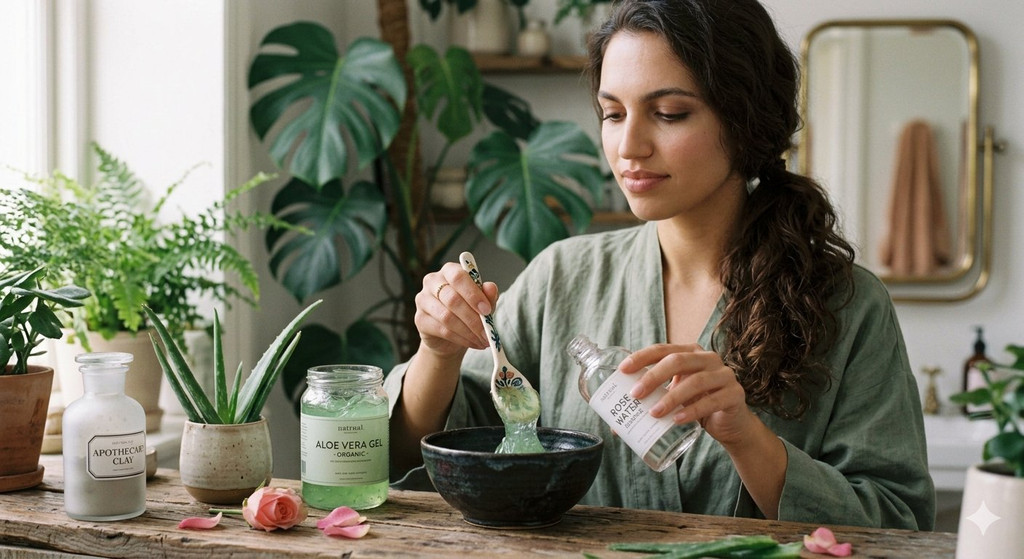
Aloe vera and rose water are popular ingredients in homemade hair-care routines. Together, they can create a lightweight, soothing-feeling mask.
How to do it:
- Take 2 tablespoons of plain aloe vera gel.
- Add 1–2 tablespoons of rose water.
- Mix until you get a smooth consistency.
- Apply the mixture to the scalp and hair lengths.
- Leave it on for approximately 20–30 minutes.
- Rinse thoroughly.
- Shampoo if necessary and follow with conditioner.
This mask may be particularly appealing if your hair feels dry or your scalp needs a refreshing treatment.
5. Combine Rose Water With Glycerin for Frizz
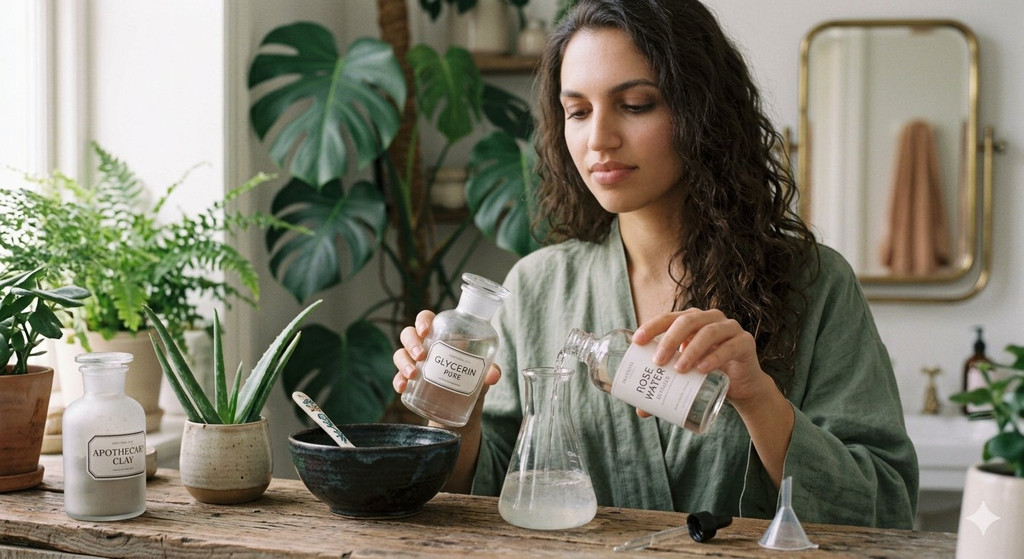
Glycerin is a humectant, meaning it attracts and holds water. When used appropriately, it can be useful in moisturizing hair products.
A small amount of glycerin can be combined with rose water to create a lightweight hair mist.
How to do it:
- Add approximately 100 ml of rose water to a clean spray bottle.
- Add a small amount of vegetable glycerin.
- Shake gently to combine.
- Spray a small amount onto the mid-lengths and ends.
- Comb or smooth the hair gently with your fingers.
Don’t overdo the glycerin. Too much can leave hair sticky or weighed down.
6. Use Rose Water as a Leave-In Hair Mist
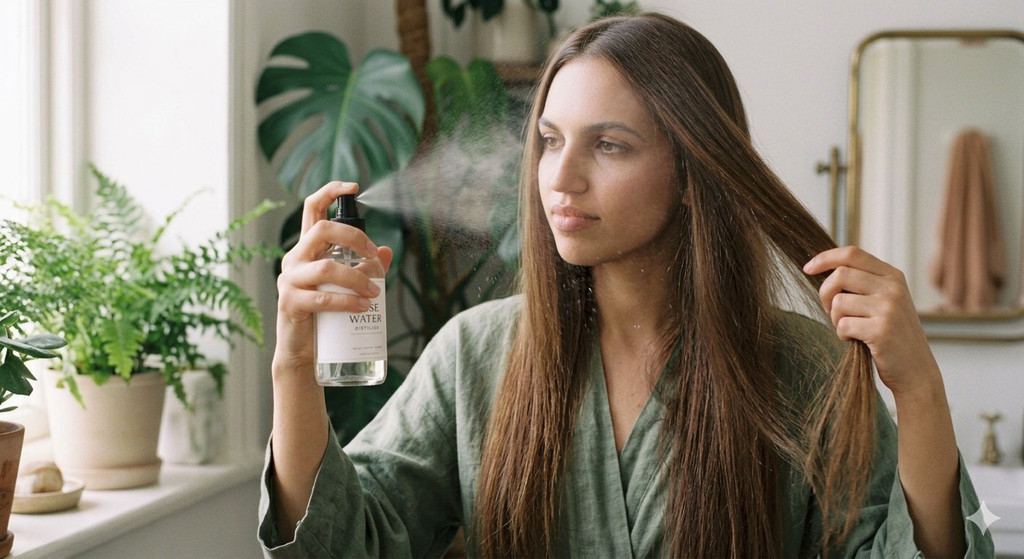
A leave-in mist is probably the simplest way to incorporate rose water into everyday hair care.
How to do it:
- Fill a clean spray bottle with pure rose water.
- Lightly mist your hair after washing.
- Concentrate on the mid-lengths and ends if your hair is dry or frizzy.
- Gently detangle your hair.
- Let it air-dry or style as usual.
You don’t need to saturate the hair. A small amount is generally sufficient.
How Often Should You Use Rose Water on Your Hair?
There is no universally established frequency for using rose water on hair. Your ideal routine depends on your scalp, hair type, and the specific product you’re using.
For most people, 2–3 times a week is a reasonable starting point. If your scalp and hair tolerate it well, you can adjust the frequency.
For a lightweight leave-in mist, some people may prefer to use it more frequently. However, frequent application isn’t automatically better.
Pay attention to how your hair and scalp respond. If your scalp becomes irritated, dry, itchy, or unusually oily, reduce or stop use.
Final Thoughts:
Rose water for use in hair can be a simple and refreshing addition to your beauty routine. It may help your scalp feel refreshed, provide lightweight moisture, reduce the appearance of dryness and frizz, and give hair a fresh, soft feel.
However, it’s important to keep expectations realistic. Rose water is not a proven hair-growth treatment, and there is currently no strong evidence that it directly stimulates hair follicles or significantly increases hair growth.
If you enjoy using it, treat rose water as a supportive hair-care ingredient rather than a miracle solution. Combine it with the basics that matter most: regular cleansing, appropriate conditioning, gentle handling, a balanced diet, and suitable treatment for any underlying scalp or hair concerns.
FAQs:
Q. Can I leave rose water on my hair overnight?
A. Yes, many people can leave a simple, suitable rose-water product on their hair overnight if their scalp tolerates it. However, there is no proven additional hair-growth benefit from leaving it on overnight.
Q. Is rose water good for an oily scalp?
A. It can be a lightweight option for refreshing an oily scalp because it doesn’t add the same amount of oil as traditional oil treatments. However, rose water doesn’t control scalp oil production or replace regular cleansing.
Q. Can rose water help with dandruff?
A. Rose water may make a dry or uncomfortable scalp feel refreshed, but it is not a proven treatment for dandruff. Persistent dandruff is better managed with an appropriate anti-dandruff treatment.
Q. Can rose water make hair grow faster?
A. There is no strong scientific evidence showing that rose water makes hair grow faster. It may support a pleasant scalp-care routine, but it should not be considered a proven hair-growth treatment.
Q. Can I use rose water on my hair every day?
A. Some people may tolerate daily use, particularly when using a simple leave-in mist. However, daily application isn’t necessary for everyone. Start with a few times a week and adjust based on how your scalp and hair respond.
Q. Can I use rose water directly on my scalp?
A. Yes, rose water can be lightly sprayed directly onto the scalp if the product is suitable for cosmetic use and your skin tolerates it. Avoid soaking the scalp and stop using it if irritation develops.

Amit Bose is a BA student studying journalism. He follows online news closely and runs a news page on Facebook. At FastNewsFeed, he covers news and current events, and also writes on finance, beauty and lifestyle topics using published sources.