
How to Use Rose Water on Face: 8 Simple Ways (Day & Night)
Last updated:
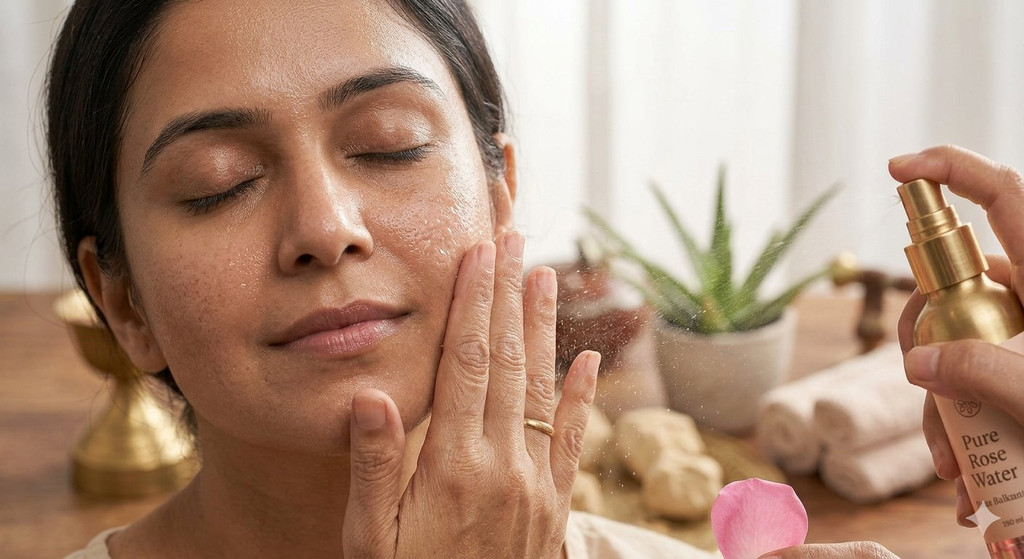
Rose water has been used in skincare for centuries and remains a popular ingredient in many beauty routines. Made by distilling rose petals with water, it has a light, refreshing feel and can be used in several simple ways on the face. Depending on the formulation, rose water can help refresh the skin, provide light hydration, and make the skin feel comfortable after cleansing. See below for some more ways on how to use rose water on face.
1. Use Rose Water as a Toner After Face Wash:
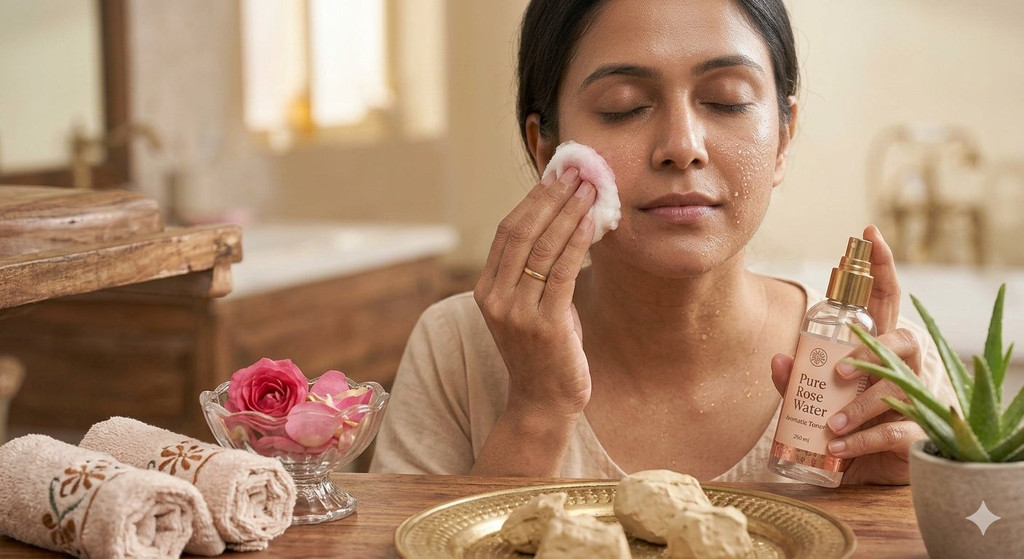
One of the easiest ways to use rose water is as a toner after cleansing your face. After washing, the skin can feel clean but sometimes slightly dry or tight. A suitable rose water product can provide a refreshing step before you apply moisturizer or other skincare products.
How to use rose water as a toner
- Start by washing your face with a gentle cleanser suitable for your skin type.
- Rinse thoroughly with clean water.
- Pat your face gently with a clean towel. Avoid rubbing the skin.
- Pour a small amount of rose water onto clean palms or a cotton pad.
- Gently pat the rose water onto your face, or lightly sweep the cotton pad over the skin.
- Avoid the immediate eye area.
- Allow it to absorb naturally for a few moments.
- Follow with your serum or moisturizer.
- In the morning, finish with a broad-spectrum sunscreen.
2. Use Rose Water as a Face Mist

Rose water can also be used as a facial mist when your skin needs a quick refreshing boost. This can be particularly pleasant during hot weather or after spending time outdoors.
A face mist can make your skin feel refreshed, but it shouldn’t be confused with a moisturizer. If your skin is dry, misting alone may not provide enough lasting hydration.
How to use rose water as a face mist
- Choose rose water that is specifically intended for cosmetic or facial use.
- If necessary, transfer it to a clean spray bottle designed for skincare.
- Hold the bottle several inches away from your face.
- Close your eyes and mouth.
- Spray a light, even mist over your face.
- Let it settle naturally for a few seconds.
- Gently pat your skin if needed.
- If your skin is dry, follow with moisturizer.
3. Use Rose Water Overnight With Glycerin
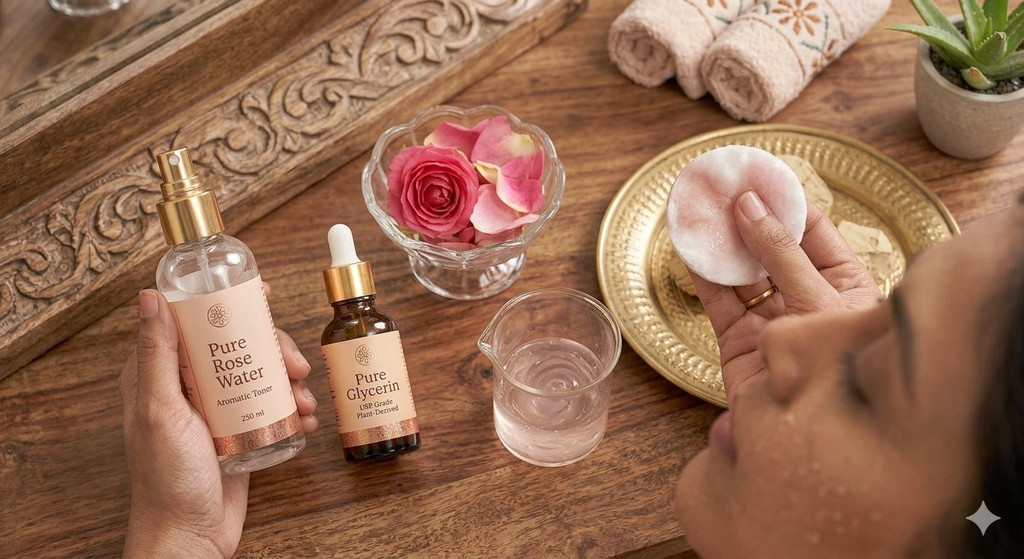
If your skin tends to feel dry or dehydrated, you can combine rose water with glycerin. Glycerin is a humectant that helps attract and retain water in the outermost layer of the skin.
This combination can create a simple, lightweight hydrating treatment, although it isn’t suitable for everyone. Using too much glycerin can make the mixture feel sticky and uncomfortable.
Simple rose water and glycerin mixture
- 1 tablespoon rose water
- ½ teaspoon glycerin
How to use it overnight
- Cleanse your face with a gentle cleanser.
- Mix the rose water and glycerin in a clean container.
- Take a small amount of the mixture.
- Apply a very thin layer to your face.
- Avoid your eyes and lips.
- Leave it on overnight if your skin tolerates it.
- Wash your face gently the following morning.
- Apply your usual daytime moisturizer and sunscreen.
4. Use Rose Water as a Makeup Setting Spray
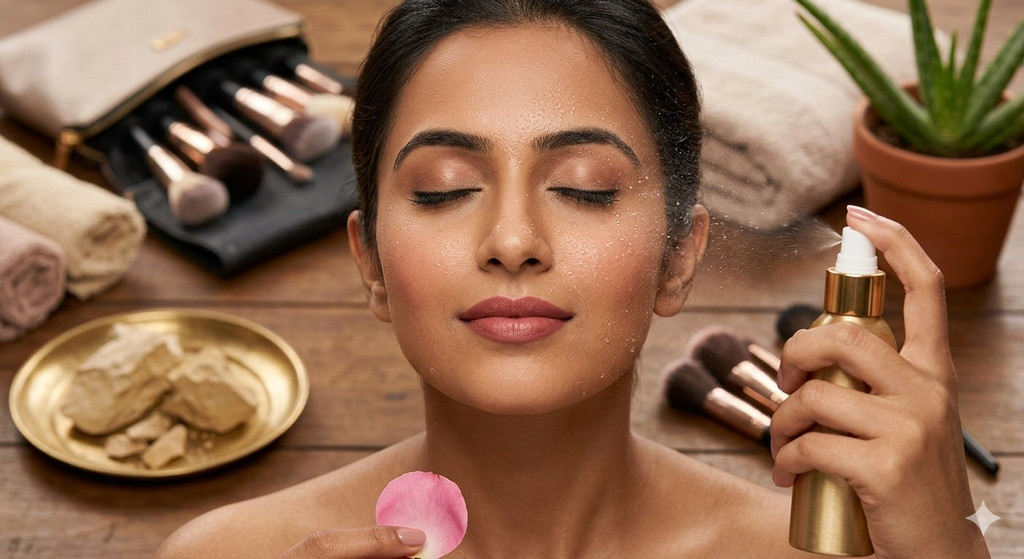
Rose water can give makeup a slightly fresh, hydrated appearance after application. However, plain rose water isn’t necessarily a true makeup setting spray. Dedicated setting sprays are formulated specifically to help makeup remain in place.
How to use rose water after makeup
- Complete your makeup as usual.
- Make sure your rose water is in a clean spray bottle.
- Hold the bottle several inches away from your face.
- Close your eyes and mouth.
- Spray a light mist over your face.
- Don’t rub or wipe the makeup afterward.
- Allow your face to dry naturally.
5. Add Rose Water to Face Packs
Rose water works well as the liquid component of many homemade face packs. It can be mixed with powdered ingredients to create a smooth paste that’s easy to spread over the face.
For example, it can be used with Multani mitti, a popular clay ingredient traditionally used in skincare.
How to use rose water in a face pack
- Place the dry face-pack ingredients in a clean bowl.
- Add rose water gradually rather than pouring in all of it at once.
- Mix until you achieve a smooth, spreadable paste.
- Clean your face before applying the pack.
- Apply a thin, even layer.
- Avoid your eyes, lips, and any broken or irritated areas.
- Leave the pack on only for the recommended amount of time.
- Rinse gently with lukewarm or cool water.
- Pat your face dry.
- Apply a suitable moisturizer.
6. Mix Rose Water With Aloe Vera Gel
Rose water and aloe vera gel make a simple combination for people who enjoy lightweight, soothing skincare. Aloe vera gel provides a cooling and hydrating feel, while rose water adds a refreshing liquid component.
Ingredients
- 1 tablespoon pure aloe vera gel
- 1 teaspoon rose water
Choose aloe vera gel intended for cosmetic use and preferably one without unnecessary fragrance or irritating additives.
How to use it
- Place the aloe vera gel in a clean bowl.
- Add the rose water.
- Mix until the ingredients are evenly combined.
- Cleanse your face.
- Apply a thin layer of the mixture.
- Avoid the eye area.
- Leave it on for about 10–15 minutes if you’re using it as a mask.
- Rinse gently with clean water.
- Apply moisturizer if your skin feels dry.
7. Use Rose Water for Tired-Looking Eyes With Cotton Pads
Cool rose water on cotton pads can provide a refreshing sensation around tired-looking eyes. It can be especially soothing after a long day or when your eyes feel tired from screen use.
However, rose water should not be considered a treatment for dark circles, eye bags, infections, or other medical eye conditions.
How to use rose water around the eyes
- Choose a rose water product suitable for cosmetic use.
- Chill a small amount in the refrigerator for a short time if you prefer a cooling effect.
- Soak two clean cotton pads in the rose water.
- Squeeze out excess liquid so the pads aren’t dripping.
- Close your eyes.
- Place the pads gently over your closed eyelids.
- Leave them in place for 5–10 minutes.
- Remove them carefully.
- Allow the area to dry naturally.
8. Use Rose Water as Part of a Makeup-Removal Routine
Rose water is sometimes described as a natural makeup remover, but plain rose water isn’t generally strong enough to remove all makeup effectively. It is particularly unlikely to remove waterproof mascara, long-wearing foundation, or other highly resistant products on its own.
Instead, use rose water as a refreshing step after proper makeup removal.
How to use rose water after removing makeup
- Start with a dedicated makeup remover, cleansing balm, cleansing oil, or micellar water suitable for your skin.
- Gently dissolve your makeup.
- Avoid vigorous rubbing, especially around the eyes.
- Follow with a gentle facial cleanser.
- Rinse your face thoroughly.
- Pat your skin dry.
- Apply rose water with clean hands or a cotton pad if desired.
- Finish with moisturizer.
How to Choose Pure Rose Water: What to Check on the Label
The term “rose water” can refer to different types of products, so reading the label is important. A product sold as rose water may contain rose hydrosol, fragrance, preservatives, alcohol, or other cosmetic ingredients.
When choosing rose water for your face, consider the following:
1. Check the ingredient list
Look for rose water or rose hydrosol as an ingredient. If you have sensitive skin, a shorter ingredient list may make it easier to identify potential irritants.
2. Look for a facial-use product
Choose a product specifically labelled for cosmetic or facial use. Culinary rose water is intended for food and isn’t automatically formulated for skincare.
3. Be cautious with added fragrance
Some products contain additional perfume or fragrance. These ingredients aren’t necessarily problematic for everyone, but they can irritate sensitive skin.
4. Check for alcohol
Alcohol can be present in some facial products. If your skin is dry or sensitive, you may prefer an alcohol-free formulation if alcohol tends to make your skin feel dry or irritated.
5. Check the packaging
Choose a properly sealed product from a reputable manufacturer. Look for the manufacturing information, expiry date, and instructions for storage.
Rose Water by Skin Type:
Rose water is also not a replacement for the essentials of skincare. A gentle cleanser, moisturizer, and sunscreen remain more important for maintaining healthy-looking skin. Use rose water as an optional, refreshing addition rather than expecting it to solve specific skin problems on its own.
Rose Water for Oily Skin
If you have oily skin, rose water can be used as a lightweight refreshing step after cleansing. It doesn’t directly stop oil production, so don’t expect it to eliminate oily skin.
Choose a lightweight, non-greasy skincare routine and follow rose water with an appropriate moisturizer. If you are acne-prone, choose products labelled non-comedogenic where appropriate.
Rose Water for Dry Skin
Dry skin may benefit from using rose water as one step in a moisturizing routine, but rose water alone isn’t enough to moisturize very dry skin.
After applying it, use a moisturizer containing ingredients designed to support the skin barrier. If you want to use glycerin with rose water, use only a small amount and patch-test the mixture first.
Rose Water for Sensitive Skin
Sensitive skin requires more caution. Choose a simple formulation and avoid products with ingredients that you already know trigger irritation.
Before applying rose water to your entire face, perform a patch test. If you notice burning, persistent redness, itching, or swelling, discontinue use.
Side Effects of Rose Water
Most people can use a suitable rose water product without problems, but some formulations may cause irritation or allergic reactions, particularly in sensitive skin. Patch-test new products and discontinue use if you develop a reaction.
Final Thoughts
Rose water is a versatile addition to a simple skincare routine. You can use it as a toner after washing your face, mist it during the day, combine it with glycerin or aloe vera, add it to face packs, or use it as a refreshing step after removing makeup.
FAQs:
A. Yes, if your skin tolerates the product well, you can generally use facial rose water every day. Many people use it once or twice daily after cleansing.
A. Yes, a properly formulated cosmetic rose water can generally be left on the skin if it doesn’t cause irritation. You don’t have to rinse it off when using it as a toner or mist.
A. Rose water can be used as a simple toner-like step, but it isn’t necessarily equivalent to every facial toner.
A. Yes. If the product is specifically formulated for facial use, you can apply it directly with clean hands, a cotton pad, or a spray bottle. Avoid getting it into your eyes, particularly if the product isn’t designed for ophthalmic use.
A. Yes. A simple routine can be:
Cleanser → Rose water → Serum (optional) → Moisturizer → Sunscreen in the morning.
At night, you can omit sunscreen and finish with your moisturizer or other suitable nighttime products.
A. Rose water shouldn’t be considered an acne treatment. Although it may make oily skin feel refreshed, it isn’t a proven substitute for acne treatments designed to address clogged pores and inflammation.

Amit Bose is a BA student studying journalism. He follows online news closely and runs a news page on Facebook. At FastNewsFeed, he covers news and current events, and also writes on finance, beauty and lifestyle topics using published sources.