
How to Wear Rajputi Saree: A Complete Step-by-Step Styling Guide
Last updated:
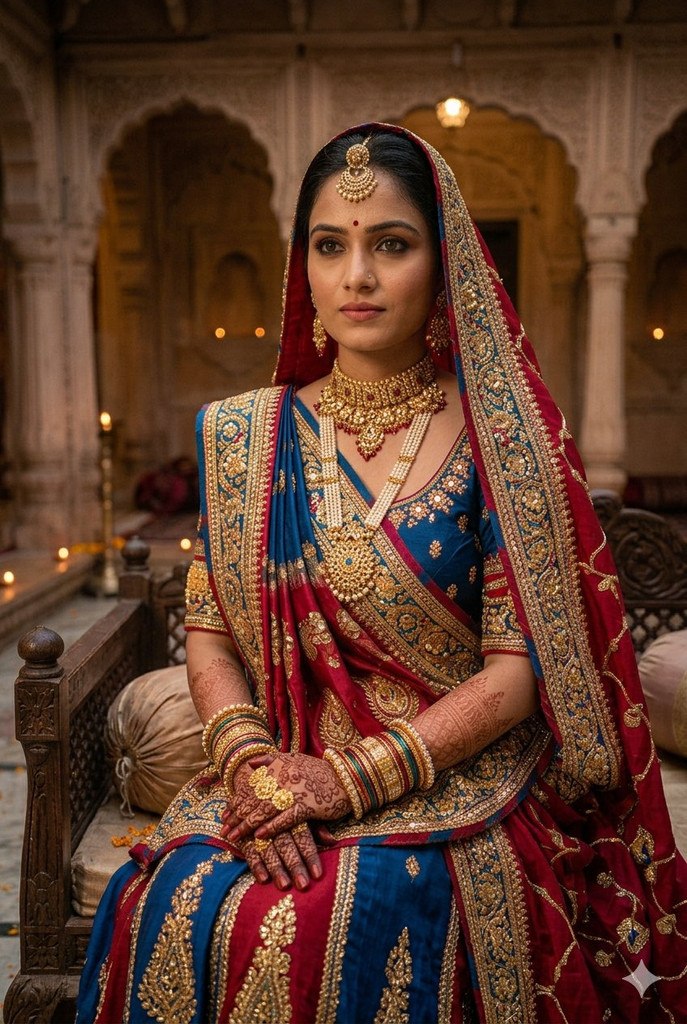
The Rajputi saree is a beautiful expression of traditional Rajasthani fashion, known for its graceful drape, rich fabrics, vibrant colours, and elegant styling. Often associated with royal-inspired dressing, the Rajputi saree creates a distinctive silhouette while combining modesty, sophistication, and traditional charm.
Unlike the everyday saree drape, the Rajputi style is often recognised by the way the pallu is arranged over the head and upper body. Traditional jewellery, a coordinated blouse, and carefully arranged pleats complete the look.
Whether you are preparing for a wedding, festival, family celebration, cultural event, or simply want to experiment with traditional Rajasthani fashion, learning how to wear Rajputi saree can help you create an elegant and authentic appearance.
What Is a Rajputi Saree?
A Rajputi saree refers to the traditional saree styling associated with Rajput and Rajasthani traditional dress. The saree is generally worn in a way that provides graceful coverage, with the pallu often brought over the head and arranged around the upper body.
The exact draping method can vary according to family traditions, region, occasion, saree fabric, and personal preference. Some styles are more elaborate and ceremonial, while others are adapted for modern occasions.
Traditional Rajputi sarees may feature bright colours, intricate borders, zari work, embroidery, bandhani, or other regional textile influences. The saree is often accompanied by traditional jewellery, including necklaces, earrings, bangles, maang tikka, and other accessories.
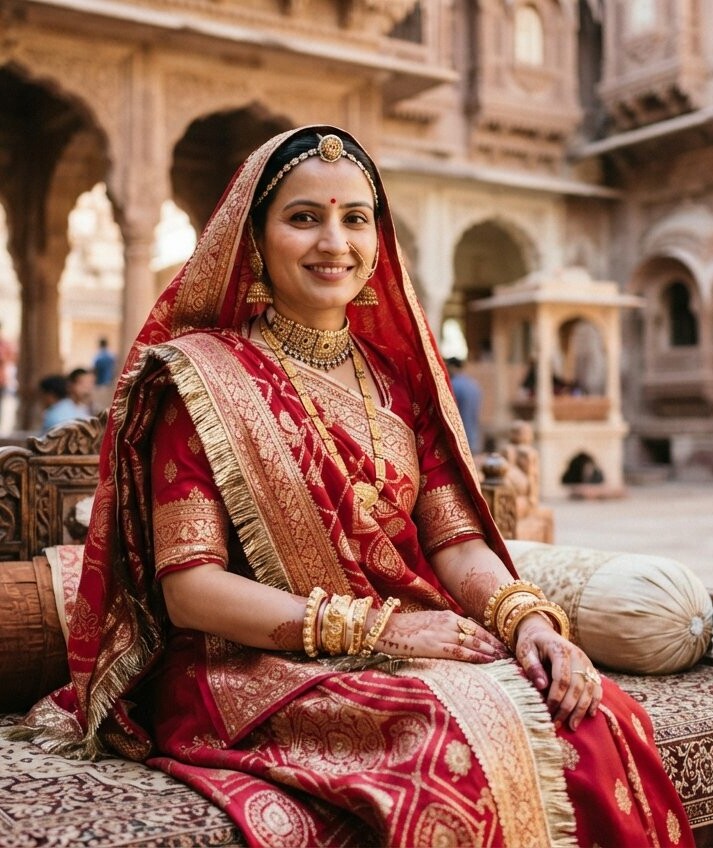
How to Wear Rajputi Saree: Things You Need Before Draping a Rajputi Saree
Before beginning, prepare everything you need. Having the accessories ready can make the draping process much easier.
You will generally need:
- A Rajputi saree
- A well-fitted blouse
- A petticoat or suitable underskirt, if required by the draping method
- Safety pins
- Matching footwear
- Traditional jewellery
- Hair accessories, if desired
- A waist belt or kamarbandh, if appropriate
Choose footwear before making the final saree pleats. The height of your footwear can affect the finished length of the saree. See below how to wear Rajputi Saree.
Step 1: Choose the Right Saree
The first step is selecting a saree that works for the occasion and the style you want to create.
For weddings and formal celebrations, richly decorated sarees with zari borders, embroidery, or traditional patterns can create a grand appearance. For festivals or daytime events, lighter fabrics and simpler designs may be more comfortable.
Colour also plays an important role. Traditional Rajasthani-inspired looks often feature vibrant shades such as red, maroon, pink, orange, yellow, green, and royal blue. However, contemporary Rajputi styling can also incorporate pastel and neutral shades.
When selecting the saree, pay attention to the border and pallu. The pallu is particularly important because it becomes a prominent part of the overall Rajputi look.
Step 2: Wear the Blouse and Petticoat
Put on your blouse before beginning the saree drape.
The blouse should fit comfortably around the shoulders, bust, and waist. Since the pallu may cover a substantial portion of the upper body, avoid choosing a blouse that feels restrictive when the fabric is placed over the shoulder and head.
Wear the petticoat securely around your waist if your chosen draping method requires one. It should be firm enough to support the saree without being uncomfortable.
Make sure the drawstring is properly tied and tucked away so that it does not interfere with the saree pleats.
Step 3: Tuck the Saree Into the Waist
Start by identifying the plain end of the saree, opposite the pallu.
Hold the upper edge of the saree at your waist and begin tucking it into the petticoat. Traditionally, the saree is wrapped around the body before creating the front pleats.
Keep the lower edge of the saree approximately at ankle level. The saree should not drag on the floor, particularly if you will be walking or attending a crowded event.
Wrap the saree around your waist once and bring the fabric toward the front.
Avoid making the initial tuck too loose. A secure foundation makes the rest of the drape much easier.
Step 4: Create the Front Pleats
The pleats are one of the most important parts of any saree drape.
Gather a section of fabric at the front and create several evenly sized pleats. Keep the pleats facing in the same direction and make sure their bottom edges are aligned.
Depending on the saree’s width and fabric, you can create approximately 5-8 pleats. The exact number is less important than keeping them neat and comfortable.
Hold the pleats together and tuck them securely into the waistband at the centre or slightly to one side, depending on the particular draping style.
Once tucked, straighten the pleats from top to bottom.
If necessary, use a safety pin discreetly to hold them together. This is particularly helpful for slippery fabrics.
Step 5: Arrange the Saree Around the Waist
After securing the front pleats, wrap the remaining fabric around your waist toward the other side.
Keep the upper edge of the saree relatively level around the waist. Smooth out any visible folds or bunching.
The lower edge should remain consistent in height around the body. Take a moment to walk a few steps and check that the saree is comfortable.
A good Rajputi saree drape should allow you to move naturally while maintaining its structured appearance.
Step 6: Arrange the Pallu
The pallu is the defining feature of many Rajputi saree styles.
Take the pallu and bring it around the body toward the shoulder. Depending on the traditional style you are following, the pallu can be arranged over the shoulder and then brought over the head.
Create broad, neat pleats in the pallu. Keep the decorative border visible because it is often one of the most attractive elements of the saree.
Secure the pallu at the shoulder with one or two safety pins.
Make sure the pins are hidden beneath the fabric. Avoid placing pins where they can scratch the skin or become visible.
Step 7: Cover the Head With the Pallu
For a traditional Rajputi appearance, the pallu is often placed over the head.
Gently bring the pallu forward over the head, allowing it to frame the face. The amount of coverage can vary according to personal preference, occasion, and family or regional tradition.
The pallu should not be pulled so tightly that it affects your hairstyle or causes discomfort.
For a formal event, you can arrange the pallu so that its decorative border frames the face. This creates an elegant, structured appearance.
If the fabric is lightweight or slippery, discreet pins can help keep the pallu in place.
Choosing the Right Blouse:
The blouse can significantly influence the finished look.
For a traditional appearance, consider blouses with:
- Embroidery
- Brocade
- Zari detailing
- Traditional motifs
- Elbow-length or three-quarter sleeves
- Coordinated colours
A contrasting blouse can also create an attractive effect. For example, a deep red saree can be paired with a contrasting gold or green blouse.
For a modern interpretation, you can choose a simpler blouse with clean lines and minimal embellishment.
The most important consideration is comfort. Since the pallu may be arranged over the head and shoulder, the blouse should allow comfortable movement.
How to Style Jewellery With a Rajputi Saree:
Jewellery is an important part of the Rajputi aesthetic.
Traditional jewellery can include:
- Kundan necklaces
- Borla or traditional maang tikka
- Jhumkas
- Choodis
- Bangles
- Kadas
- Nath
- Hathphool
- Kamarbandh
You do not have to wear all of these pieces. Instead, select jewellery according to the occasion and the richness of your saree.
For example, if the saree has heavy embroidery and a prominent border, a statement necklace and traditional earrings may be sufficient.
For a wedding or formal celebration, you can create a more elaborate look by adding a maang tikka, bangles, and other coordinated accessories.
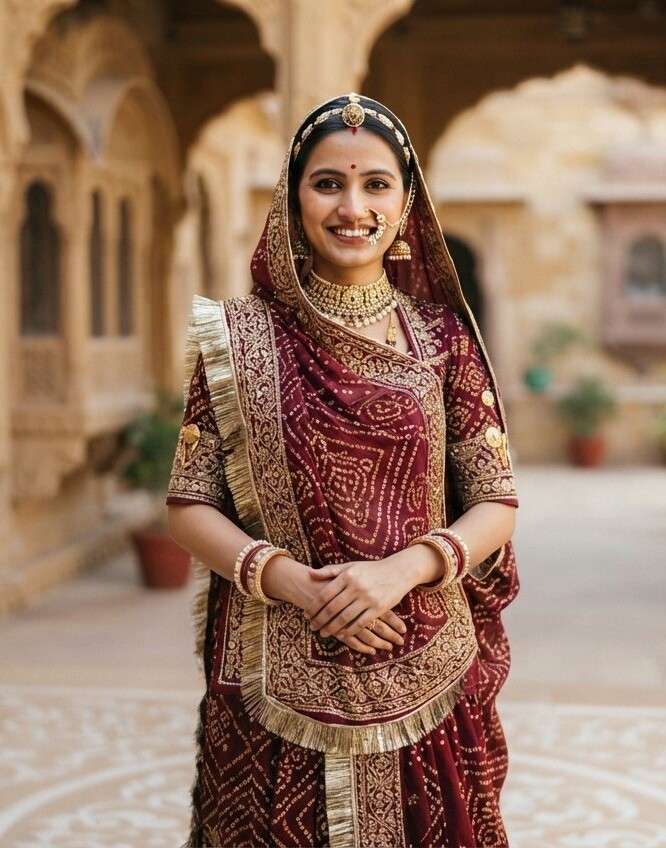
How to Wear Rajputi Saree for Different Occasions
For Weddings
For weddings, choose a richly decorated saree and coordinate it with traditional jewellery. A head-covered pallu, statement necklace, maang tikka, and bangles can create a formal traditional appearance.
For Festivals
For festivals, consider a lighter saree with vibrant colours. Keep the jewellery comfortable and choose accessories that allow you to move easily.
For Family Functions
A moderately embellished saree paired with a traditional blouse and simple jewellery can create an elegant family-function outfit without being excessively elaborate.
For Cultural Events
If you are attending a cultural programme or traditional celebration, you can emphasise the regional character of the outfit through traditional colours, textiles, jewellery, and a carefully arranged head-covering pallu.
Common Mistakes to Avoid:
Making Uneven Pleats
Uneven pleats can make the saree look untidy. Take time to align the pleats before securing them.
Leaving the Pallu Too Loose
A loose pallu can shift while walking. Secure it discreetly at the shoulder and, if necessary, around the head.
Using Too Many Accessories
A heavily embroidered saree already makes a strong statement. Too many competing jewellery pieces can make the outfit appear crowded.
Ignoring Comfort
Traditional styling should not come at the expense of comfort. Make sure you can sit, walk, and move your arms comfortably.
Choosing the Wrong Saree Length
A saree that is too short may not provide enough fabric for the desired drape, while excessive length can make walking difficult.
Conclusion:
Learning how to wear Rajputi saree is a wonderful way to embrace the elegance of traditional Rajasthani fashion. From choosing the right saree and blouse to creating neat pleats and arranging the pallu over the head, every step contributes to the final appearance.
The most distinctive element is the graceful pallu arrangement, but the overall look also depends on coordinated jewellery, hairstyle, footwear, and accessories.
Whether you are dressing for a wedding, festival, family celebration, or cultural occasion, focus on neat draping, comfortable styling, and balanced accessories. With a little practice, you can wear a Rajputi saree confidently while maintaining its traditional charm and adapting it to your personal style.

Amit Bose is a BA student studying journalism. He follows online news closely and runs a news page on Facebook. At FastNewsFeed, he covers news and current events, and also writes on finance, beauty and lifestyle topics using published sources.