
Goa Traditional Dress for Male & Female: Names, History and Photos
Last updated:
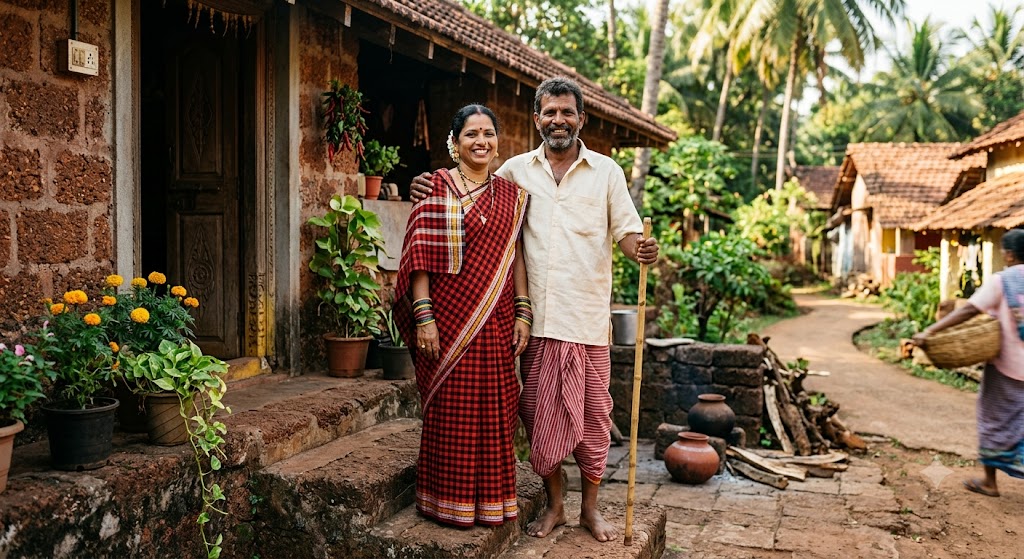
Goa is famous all over the world for its sandy beaches and the rays of the dazzling sun. As rich as Goa is as a tourist destination, its history is equally grand and culturally invaluable. People are not unaware of the Portuguese history of Goa, but are you familiar with the traditional Goa dress? As you walk through the countryside of Goa, you will catch a glimpse of the tribal history of Goa in the distinctive red check print sarees worn by the women of Goa.
This simple yet vibrant garment, which has changed over time, is one of the remaining monuments of the Kunbi and Gavda tribal tribes that lived around the hills of Goa in ancient times. Below are the names of the main traditional dresses of Goa for men and women.
History of Goa Traditional Dress
The traditional dress of Goa is a mixture of Portuguese and Hindu influences. For men, Goa’s traditional dress includes a dhoti paired with a short-sleeved shirt.
Women traditionally wear a sari, often made of bright fabrics. The saree is teamed with a blouse. The loose end of the saree, called the pallu, goes over the shoulder.
In modern times, the traditional Goan costume has been replaced by more Western clothing, but Goan ethnic wear is still commonly seen during festivals and special events.
The traditional dress of Goa is often brightly colored and decorated with intricate embroidery, reflecting the state’s rich cultural heritage.
No one garment can be called the traditional costume here. Kunbi sarees, Pano Bhaju to midi dresses, and resort wear are in vogue here.
Christmas, Easter, Carnival, Diwali, Shigmo (Vasantotsav), Chavoth (Ganesh Chaturthi), Samvatsar Padav (Gudi Padwa), Dussehra, etc. are the main festivals celebrated here. The costumes here can be known in detail through the festivals.
It is said that Goans are born for music and sports. Music was a household presence in Goa during the Portuguese rule. The cultural dances of Goa include Dekni, Fugdi, Corridinho, Mando, Dulpod, and Fado.
Goa is hot and humid for most of the year, so cotton is the main fabric for daily wear. That is the opposite of Himachal traditional dress, which uses warm wool for the cold hills.
Names of Goa Traditional Dresses
This table lists the main traditional dresses of Goa, who wears them, and when.
| Traditional Dress | Worn By | Key Features | Occasions / Significance |
| Kunbi Saree | Kunbi tribal women and married women | Red-and-white checked cotton saree with woven border | Symbol of Goa’s tribal heritage; worn during cultural dances like Fugdi and Dhalo |
| Pano Bhaju | Women | Embroidered blouse, dhoti-style skirt, and stole/dupatta | Worn during Mando folk dance and traditional celebrations |
| Kashta Saree | Fisherwomen and rural women | Nauvari-style saree draped above the knees for easy movement | Ideal for fishing, farming, and daily work; also worn at weddings |
| Kashti Dhoti | Tribal and farming men | Red-and-white dhoti designed for mobility | Common among farmers and coconut tree climbers |
| Nauvari Saree | Goan women | Traditional nine-yard saree, often paired with flowers and gold jewelry | Popular during festivals, weddings, and religious occasions |
| Valkal Dress | Women of some tribal communities | Garment made from tree bark with bead necklaces | Represents ancient tribal traditions of Goa |
| Fishermen’s Attire | Fishermen | Knee-length lungi with colorful T-shirt or vest and a red cap | Everyday workwear and festive attire with decorated lungi |
| Modern Goan Clothing | Men and women | Western wear, casual beachwear, resort wear, and midi dresses | Common for daily life, tourism, and beach activities |
| Traditional Accessories | Women | Gajra (flower garland), gold jewelry, bindi/tilak, Walo, Tuvalo, Chador | Completes the traditional Goan look during festivals and ceremonies |
| Festival Costumes | Men and women | Traditional dresses worn according to festivals like Carnival, Shigmo, Christmas, Diwali, and Ganesh Chaturthi | Reflect Goa’s rich cultural and religious heritage |
What Is the Most Famous Dress of Goa?
The Kunbi saree is the most famous dress of Goa. It is a red and white checked cotton saree that comes from the Kunbi tribal community. Today it is a symbol of Goa’s tribal heritage, and women wear it for folk dances like Fugdi and Dhalo.
Traditional Dress of Goa for Men
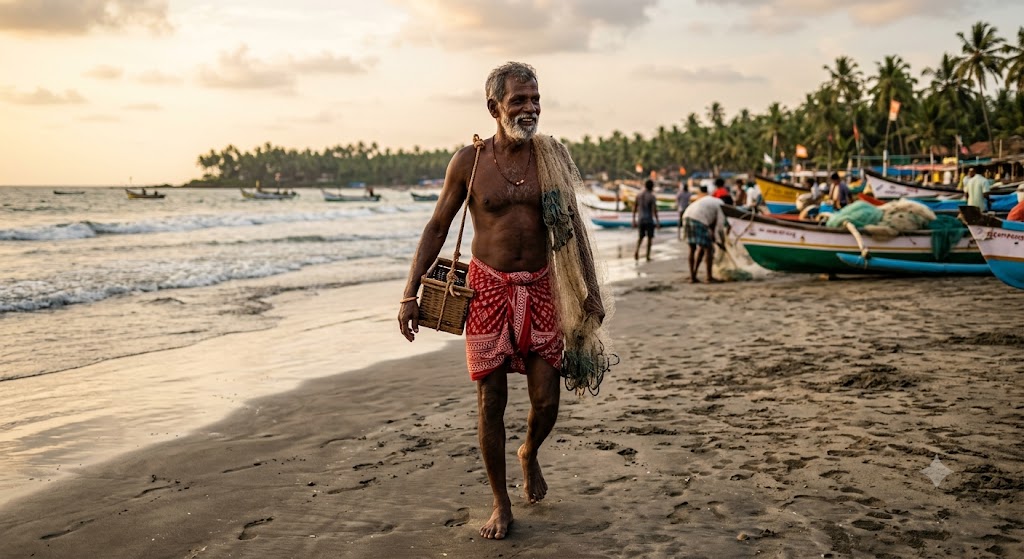
Kashti Dhoti
Kashti is a red and white dhoti worn by tribal and farming men. It is made for easy movement. Men wear it to work in the fields and to climb coconut trees.
Dhoti with Shirt or Kurta
For festivals and cultural events, many Goan men wear a dhoti with a shirt or a kurta.
Fishermen’s Lungi and Red Cap
The costumes of fishermen are different. They wear a knee-length lungi with a colorful T-shirt or vest. A cap, usually of red color, is worn on the head. Men in Tamil Nadu also wear the lungi every day, as you can see in this guide to Tamil Nadu traditional dress.
Wedding Attire
On the occasion of marriage, fishermen wear a white lungi with a colorful T-shirt. The lungi has silk threadwork on the border.
Goa Traditional Dress for Women and Girls
Goan women have more traditional outfits than men. The three best known are the Kunbi saree, the Pano Bhaju and the Kashta saree. Each one comes from a different community in Goa.
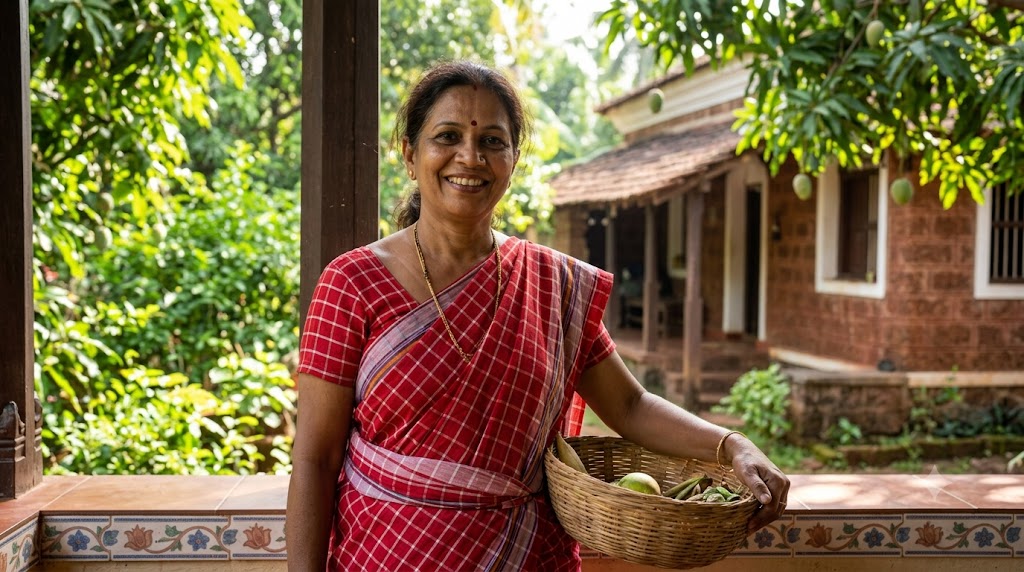
Kunbi Saree:
Kunbi is a tribal tribe living in Goa, whose Goa famous dress has become the identity of the Goa dress name today.
Kunbi is a cotton saree with small squares in white. Farmers and working women wear this sari with a check pattern.
It looks very different from the cream Kasavu saree with a gold border in Kerala traditional dress, but both are cotton sarees made for a hot coast.
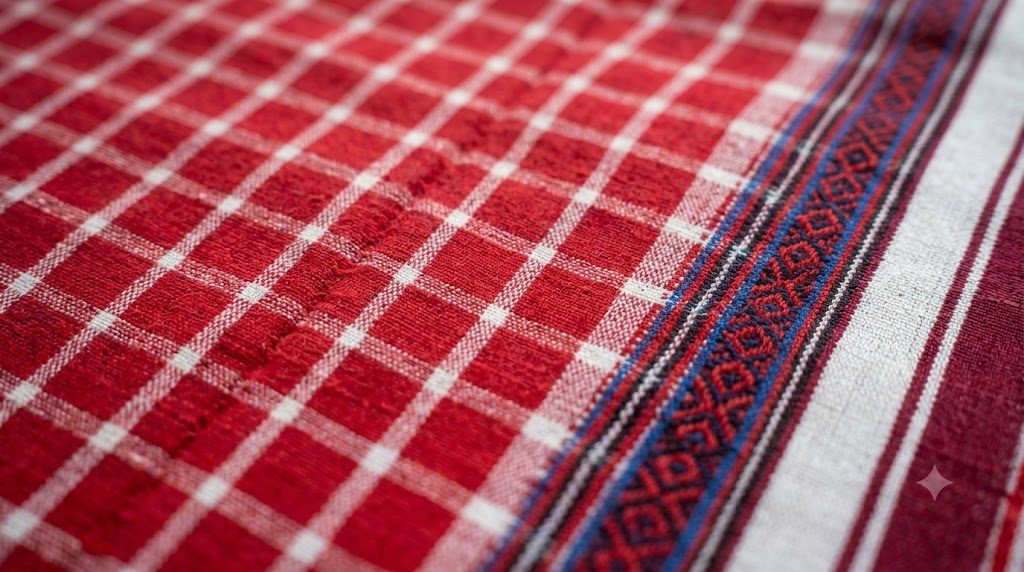
Silk threads are used in its border dobby (a type of cloth weaving). The check pattern of the saree is also considered Navagraha or Navaratna.
The literal meaning of Kunbi is Kun meaning people and Bi meaning seed, meaning people who make many seeds from one seed. This fabric was originally the identity of farmers and workers.
Before the 1940s, this six-yard saree was worn without a blouse in such a way that it covered the front and back of the body. Now there are many ways to wear it.
- Basically, Kunbi is red in color. Apart from this, it has some fixed colors, which have been decided according to the lifestyle.
- Yellow (Kesar) color is the symbol of youth.
- Red is called Tamodh and green is called Hirwa.
- Purple is worn during marriage, and black during old age and death.
- The way of tying it by women is also special. In this, the saree is worn to the knees by making pleats, and the pallu is tied on the shoulder by tying a knot.
- Here, in cultural dances like Fugdi and Dhalo, women wear only a Kunbi saree with red and white squares.
- The reddish-white Kunbi saree is believed to be worn only by married women, while the light purple color is worn by widows.
- Most of the women here wear the Maharashtrian Nauvari, i.e., a nine-yard saree.
- Nauvari Kunbi is also available in Dahwari and Chavvari forms with big, short lengths. With this, women make a bun of hair and decorate it with Gajra.
- Wearing gold coils, and rings by applying bindi or tilak on the forehead. Apart from this, Walo (small towel), Tuvalo (towel), Chador (sheet), and the traditional Godda saree were also made.
- The women of some tribes wear a garment made of tree bark i.e. Valkal with a garland of different beads.
Pano Bhaju:
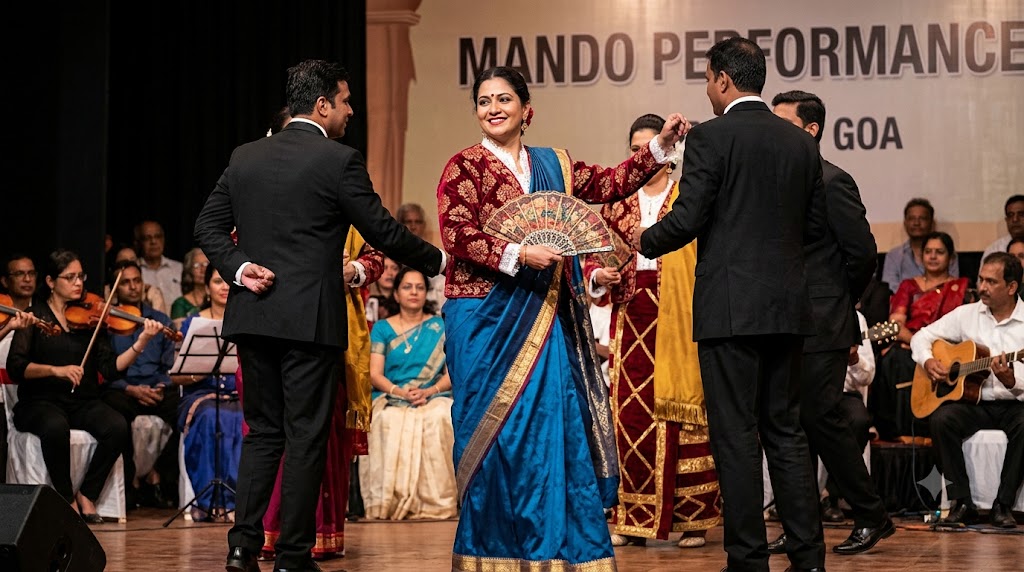
Pano Bhaju is a traditional outfit of Goan Catholic women. The pano is a wrapped skirt, and the bhaju is an embroidered blouse. A stole is worn over it. Mando, the folk dance of Goa, is performed wearing this dress.
Mando was a musical festival celebrated among the Catholics of Goa in the 19th and 20th centuries. Men wear formal clothes, while women wear Pano Bhaju.
Earlier, this Goa cultural dress was made of muslin and silk, on which gold or silver work was done. Red, blue, and green colors were prominent in this.
Whereas the color of the stole was blue or white. With this, white socks were worn of white color.
Kashta Saree:
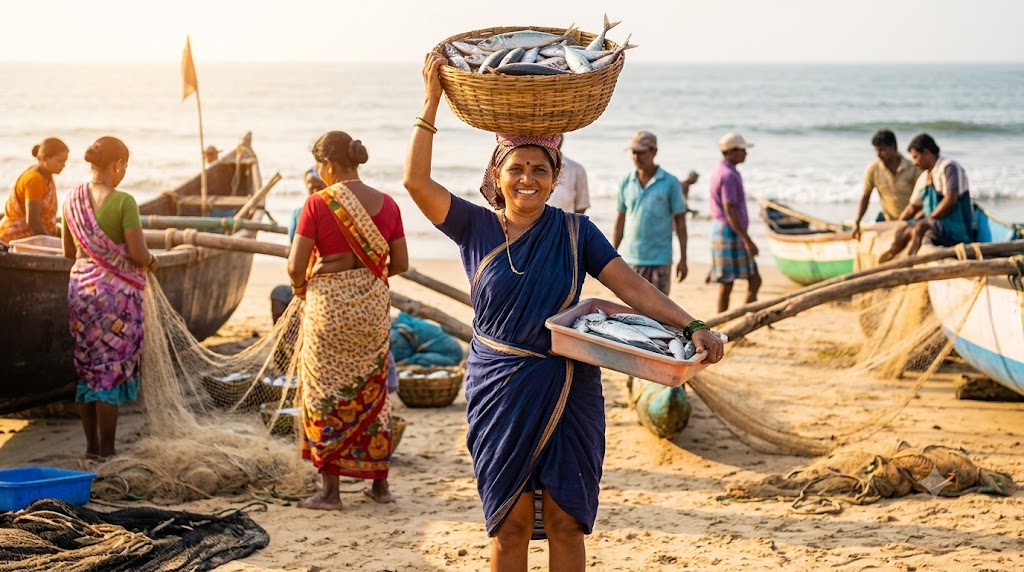
Goa falls in the Konkan region, and the population of many areas here is dependent on fish-based business.
Fisherwomen here wear a Kashta saree.
The Kashta saree is also worn in Maharashtra. This Nauvari saree is tied only above the knee so that it is easy to work.
Peasant women keep a simple pallu, while Koli women wear it in two parts. One part is used for the lower dhoti and the other is worn as a dupatta.
What Young Girls in Goa Wear
Most girls in Goa wear Western clothes in daily life, like frocks, dresses, tops and jeans. For festivals, school functions and folk dances like Fugdi, many girls wear a Kunbi saree or a simple cotton saree. Catholic girls often wear dresses or gowns to church and weddings.
Conclusion:
In addition to traditional dress, visitors to Goa will see a mix of Western and Indian fashion, with many locals wearing casual, beach-friendly clothing during the day and more formal attire in the evening.
Regardless of what people are wearing, Goa’s relaxed, laid-back atmosphere is evident in the way everyone is dressed.
Every Indian state has its own traditional clothes. To see how Goa compares with the rest of the country, read our guide to the cultural dress of India.
FAQs:
A. The traditional dress of Goa includes the Pano Bhaju for women and the Kashti or dhoti with a shirt or kurta for men.
A. Pano Bhaju is a traditional outfit of Goan Catholic women. The pano is a wrapped skirt, and the bhaju is an embroidered blouse. A stole is worn over it.
A. Traditionally, Goan men wear a dhoti (Kashti) with a kurta or shirt.
A. Yes, traditional attire is commonly worn during festivals, weddings, folk dances, and cultural celebrations, although everyday clothing is mostly modern.
A. Cotton and silk are the most commonly used fabrics because they are comfortable in Goa’s warm and humid climate.
A. Yes. Hindu women often wear saris like the Kunbi or Nauvari. Catholic women wear the Pano Bhaju, and Western-style gowns or saris on special occasions.
A. Traditional Goan attire is often complemented with gold necklaces, bangles, earrings, anklets, and decorative hair accessories.
A. Traditional Goan clothing reflects the state’s rich cultural heritage, blending Indian traditions with Portuguese influences.
A. They are mainly worn during festivals, weddings, religious ceremonies, folk performances, and cultural events.
A. Portuguese influence is visible in the use of embroidered garments, Western-style dresses, lace details, and formal attire, especially among Goa’s Christian community.
A. The Kunbi saree is the most famous dress of Goa. It is a red and white checked cotton saree from the Kunbi tribal community.
A. Most Goan girls wear Western clothes like frocks, dresses, and jeans every day. For festivals and folk dances like Fugdi, many wear a Kunbi saree.

Moumita Sen is a recent graduate who studied finance and medical subjects. She writes on personal finance, hair care and lifestyle topics. She is not a medical professional; health-related articles on FastNewsFeed are based on published medical sources.