
How to Wear Mugappu Chain: A Complete Styling Guide
Last updated:
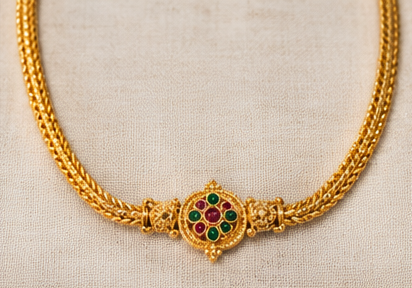
Jewellery has always played an important role in South Indian traditions, and few pieces capture the beauty of traditional bridal styling quite like the mugappu chain. Known for its distinctive pendant or decorative front element, the mugappu chain can add a graceful, traditional touch to a saree, silk outfit, or even a contemporary ethnic look.
However, wearing a mugappu chain is not simply about putting it around your neck. The way you position the chain, coordinate it with your neckline, pair it with other jewellery, and balance it with your hairstyle and saree can make a significant difference to the overall appearance.
Whether you are preparing for a wedding, festival, religious ceremony, family celebration, or simply want to incorporate traditional jewellery into your wardrobe, this guide explains how to wear mugappu chain beautifully.
What Is a Mugappu Chain?
A mugappu chain is a traditional Indian necklace style generally characterised by a decorative front section or pendant-like element. The word “mugappu” is associated with the front or prominent portion of the jewellery, and designs can vary considerably depending on the region, jewellery tradition, and craftsmanship.
Mugappu chains may be made in gold, silver, gold-plated finishes, or other jewellery materials. Some feature intricate traditional motifs, while others have a simpler and more contemporary appearance.
The necklace can be worn on its own for an elegant look or layered with other necklaces for a more elaborate traditional ensemble.
Why Is the Mugappu Chain Popular?
The appeal of the mugappu chain lies in its versatility. It can look traditional without necessarily appearing overly elaborate. Depending on the design, it can complement a bridal saree, festive silk saree, half-saree, salwar suit, or even a modern ethnic outfit.
Another reason people choose mugappu chains is their ability to become a focal point of an outfit. The decorative front portion naturally draws attention toward the neckline and face, making the necklace particularly effective when styled with the right blouse or neckline.
For special occasions, a mugappu chain can also be combined with earrings, bangles, vaddanam, and other traditional jewellery to create a coordinated appearance.
How to Wear a Mugappu Chain Correctly:
Wearing a mugappu chain correctly can beautifully enhance your traditional look while keeping the jewellery comfortable and well-positioned. From choosing the right length to placing the decorative portion at the centre, every detail matters. Proper styling also helps the chain complement your neckline, saree, and other jewellery for an elegant appearance.
1. Choose the Right Length:
The first step is selecting a chain length that works with your outfit.
A shorter mugappu chain generally sits closer to the collarbone and works particularly well with sarees and blouses featuring a traditional neckline. A longer design can fall lower on the chest and create a more dramatic appearance.
When choosing the length, consider both your neckline and the other necklaces you plan to wear.
2. Position the Decorative Portion Correctly:
The most important styling detail is positioning the mugappu portion at the centre of the neckline.
Place the central decorative element so that it rests naturally in the middle of your upper chest. Avoid positioning it too far to one side, as this can make the entire necklace look uneven.
After fastening the chain, gently adjust it in front of a mirror. Check that the centre design is sitting straight and that the chain is not twisted.
For bridal or formal styling, this small adjustment can make the necklace look considerably more polished.
3. Match the Chain With Your Neckline:
Your blouse neckline has a major influence on how the mugappu chain looks.
A round neckline is one of the easiest options because it provides a clear frame for the necklace. A moderately deep round neckline can allow the decorative portion to remain visible without competing with the blouse.
A square neckline can also work beautifully with traditional jewellery because the geometric shape provides contrast to the curves and details of the necklace.
For a high neckline, choose a shorter or more streamlined mugappu chain so that the jewellery does not appear crowded.
If your blouse has heavy embroidery, embellishments, or stones around the neckline, consider a relatively simple mugappu chain. This prevents the jewellery and blouse from competing for attention.
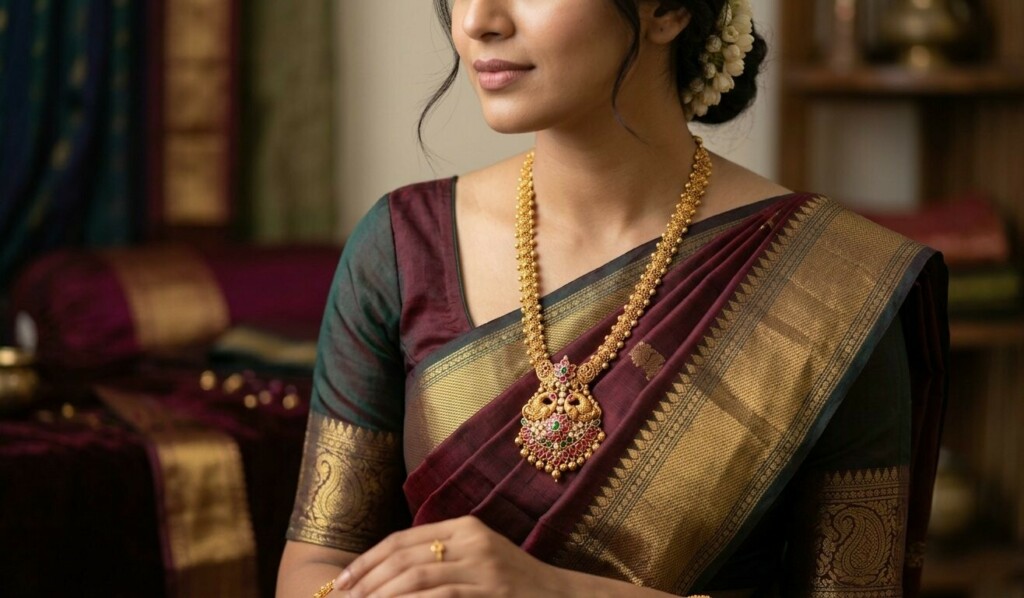
How to Wear a Mugappu Chain With a Saree:
A saree is one of the most natural outfits for a mugappu chain. The traditional character of the jewellery complements the elegance of silk, cotton, tissue, and other saree fabrics.
For a traditional silk saree, a gold mugappu chain can be paired with matching gold earrings and bangles. If the saree has a strong zari border, selecting jewellery with similar gold tones can create visual consistency.
For a lighter saree, you may prefer a more delicate mugappu chain. This prevents the jewellery from overwhelming the softer appearance of the outfit.
Styling With a Silk Saree:
Silk sarees often have rich colours, detailed borders, and zari work. Because the outfit itself is visually striking, traditional gold jewellery tends to work particularly well.
Try pairing your mugappu chain with:
- Traditional jhumkas or small gold earrings
- Matching bangles
- A simple gold waist chain or vaddanam
- A traditional hairstyle decorated with flowers
- A small bindi
The key is coordination rather than wearing every available piece of jewellery at once.
How to Layer a Mugappu Chain:
Layering is a popular way to create a grand traditional jewellery look.
If you want to layer your mugappu chain, begin with the largest or most prominent necklace. Then add shorter or longer pieces around it depending on their design.
For example, you could combine:
- A long traditional necklace
- A medium-length mugappu chain
- A shorter simple chain
The important thing is to create visible separation between the necklaces. If all the pieces sit at the same level, their designs may overlap and become difficult to distinguish.
For weddings and other elaborate occasions, a combination of different chain lengths can create a fuller and more luxurious appearance.
However, layering does not always mean wearing several heavy necklaces. You can also combine one statement mugappu chain with a delicate chain for a more modern interpretation.
How to Wear a Mugappu Chain With Modern Outfits:
Although traditionally associated with ethnic clothing, a mugappu chain does not have to be restricted to conventional saree styling.
A smaller or more contemporary mugappu chain can work with:
- Anarkali suits
- Long ethnic dresses
- Palazzo sets
- Half-sarees
- Festive kurta sets
- Contemporary sarees
For a modern appearance, avoid excessive layering. Wear the mugappu chain as the main jewellery piece and combine it with small earrings or simple bangles.
This approach allows the traditional necklace to stand out while keeping the overall outfit contemporary.
Choosing the Right Mugappu Chain for Your Outfit:
When selecting a mugappu chain, consider the complete outfit rather than looking at the jewellery piece alone.
Think about:
Colour: Gold works naturally with many traditional Indian outfits, while other finishes can provide a contemporary appearance.
Size: A larger decorative piece is suitable when the outfit and occasion call for statement jewellery. Smaller designs are easier to wear regularly.
Design: Traditional motifs work well with silk sarees and festive clothing, while minimalist designs can be used with contemporary ethnic outfits.
Neckline: The necklace should sit comfortably and remain visible without becoming tangled with the blouse or other jewellery.
Occasion: A heavy necklace may be appropriate for weddings, while a lighter version can be more practical for festivals, family events, or everyday ethnic wear.
Common Mistakes to Avoid:
Even beautiful jewellery can lose its impact when it is styled incorrectly. Here are some common mistakes to avoid when wearing a mugappu chain.
Wearing Too Many Heavy Pieces:
A statement necklace already attracts attention. Adding multiple equally heavy necklaces, large earrings, and elaborate accessories can make the outfit appear crowded.
Ignoring the Neckline:
A necklace that disappears into the neckline or overlaps heavily with blouse embellishments may not achieve the desired effect.
Allowing the Chain to Twist:
Always check the necklace from the front before leaving home. A twisted chain can make even expensive jewellery appear untidy.
Choosing Jewellery Without Considering the Saree:
The jewellery, blouse, saree, and accessories should feel like parts of the same outfit. They do not have to match perfectly, but they should complement one another.
Forgetting Comfort:
For long events, comfort matters. Make sure the chain sits securely and does not pull uncomfortably on the neck. If you are wearing several necklaces, check that they do not constantly rub against each other.
How to Care for Your Mugappu Chain:
Proper care will help preserve the appearance of your jewellery.
After wearing the chain, gently wipe it with a soft, clean cloth to remove traces of sweat, makeup, or moisture. Store it in a jewellery box or soft pouch where it will not rub against other pieces.
Avoid storing several necklaces together in one compartment, particularly if they have delicate chains or intricate details. Individual storage can reduce tangling and scratches.
It is also sensible to keep jewellery away from perfumes, hairspray, creams, and other cosmetic products. Apply these products first and put on the jewellery afterwards.
For valuable gold or gemstone jewellery, follow the care recommendations provided by the jeweller.
Final Styling Tips:
The beauty of a mugappu chain comes from the balance between the jewellery and the outfit. You do not need an extremely elaborate ensemble to make the necklace look beautiful.
For a traditional look, pair it with a silk saree, gold earrings, bangles, flowers, and a classic hairstyle.
For a bridal look, layer it carefully with complementary necklaces and coordinate the necklace with your other bridal jewellery.
For a modern ethnic look, choose a simpler mugappu chain and allow it to be the main statement accessory.
Most importantly, wear the necklace confidently and make sure it is positioned comfortably. A well-fitted chain, suitable neckline, coordinated jewellery, and balanced accessories can transform a simple ethnic outfit into a sophisticated traditional look.
Conclusion:
A mugappu chain is more than just a traditional necklace; it can become the defining jewellery element of an entire outfit. Whether you are wearing a rich silk saree for a wedding, dressing up for a festival, or creating a contemporary ethnic look, the right styling can highlight its craftsmanship and character.
Start by choosing an appropriate length, position the decorative portion at the centre, and select a neckline that allows the necklace to remain visible. From there, coordinate your earrings, hairstyle, saree, and other accessories according to the occasion.
The secret is not necessarily wearing more jewellery. Instead, focus on balance, proportion, and coordination. When styled thoughtfully, a mugappu chain can add a graceful traditional touch while remaining elegant, versatile, and distinctly personal.
FAQs:
A. A mugappu chain should sit comfortably around the neck, with its decorative front portion positioned at the centre. Adjust the chain so it lies flat and complements your neckline without twisting.
A. Yes. A mugappu chain pairs beautifully with sarees, especially silk and traditional sarees. Choose the chain according to the saree’s colour, design, neckline, and the overall level of jewellery.
A. Round, square, and moderately deep necklines generally work well with mugappu chains. The key is to choose a neckline that leaves enough space for the decorative portion of the necklace to remain visible.
A. Yes. You can layer it with shorter or longer necklaces to create a traditional, festive look. Make sure there is enough space between the necklaces so that each design remains visible.
A. Jhumkas, traditional gold earrings, studs, and other ethnic designs can complement a mugappu chain. Choose earrings that coordinate with the necklace without making the overall look appear too heavy.
A. Yes. A mugappu chain can be incorporated into bridal jewellery styling, particularly with traditional sarees and other gold jewellery. It can be paired with earrings, bangles, a maang tikka, and other complementary accessories.
A. Absolutely. A simple mugappu chain can be paired with contemporary ethnic outfits such as Anarkalis, kurta sets, half-sarees, and modern sarees for a blend of traditional and contemporary style.
A. After fastening the chain, check the necklace in a mirror and gently straighten the decorative portion. Ensure the clasp and chain are positioned properly and avoid wearing accessories that frequently catch on the necklace.
A. Choose the length based on your neckline, outfit, and whether you plan to layer the necklace. A shorter chain creates a neat look, while a longer chain can provide a more dramatic traditional appearance.
A. Keep the chain away from perfumes, creams, moisture, and hairspray. After wearing it, gently wipe it with a soft cloth and store it separately in a jewellery box or soft pouch to prevent scratches and tangling.

Amit Bose is a BA student studying journalism. He follows online news closely and runs a news page on Facebook. At FastNewsFeed, he covers news and current events, and also writes on finance, beauty and lifestyle topics using published sources.